CDW26 / FIELDNOTES

MON 21 SEPTEMBER 2026 · Nina Next Space

Day 1 Entrance Methodology

Day 1 — CDW2026

プログラム

TimeNina Next Space → Route 2
07:30–09:00Venue opens
09:00–09:40Welcome Introduction
09:45–10:30Lecture by Prof. Chương
10:30–11:30*Cảm Ứng dowsing over lunch
13:30–17:00Route 2: travel to Trà Vinh
17:00–18:00Hotel check-in & rest
EveningDinner & accommodation

* The guide prints 10:30–11:30 inside a block extending to 13:30. The printed time is retained; the end time is not confirmed.

09:00–09:40

Welcome Introduction

CDWは、土地と人々の間にすでにある未来の可能性を探すplace-basedな実践として導入された。新しいものをつくることだけに向かうのではなく、忘れられた物語を共に探し、拾い集めるcollective foragingが手がかりとなる。場所から知識を取り出すだけにせず、人・生業・素材・非人間の関係をconstellationとして捉える。CDW was introduced as a place-based practice seeking future possibilities already present among people and the land. Rather than only making something new, it invites collective foraging for forgotten stories. Knowledge is not simply extracted from a place: people, livelihoods, materials and nonhuman beings are understood as a constellation of relationships.

フィールドに持ち込む問いQuestions to carry into the field

自然を制御するControlと、変化に応じて自然と調和するAdaptationの間から、暮らしや技術を見る。この軸を唯一の評価基準とせず、土地の実践を読み解く問いとして持ち歩く。Look at livelihoods and technologies through the tension between Control of nature and Adaptation in harmony with changing conditions. Carry this as a question for understanding local practices, not as a single standard of evaluation.

文字起こし原文についてAbout the original transcript

この区間の文字起こし原文は今回取得できた資料にありません。No original transcript for this interval was available in the retrieved material.

編集済み整理記録を開くOpen edited notes

文字起こし原文ではありません。取得できた記録を統合した整理文です。These are consolidated edited notes from the retrieved records, not a verbatim transcript.

CDWは、土地と人々の間にすでにある未来の可能性を探すplace-basedな実践として導入された。新しいものをつくることだけに向かうのではなく、忘れられた物語を共に探し、拾い集めるcollective foragingが手がかりとなる。場所から知識を取り出すだけにせず、人・生業・素材・非人間の関係をconstellationとして捉える。

フィールドに持ち込む問い自然を制御するControlと、変化に応じて自然と調和するAdaptationの間から、暮らしや技術を見る。この軸を唯一の評価基準とせず、土地の実践を読み解く問いとして持ち歩く。
English companion notes for this section (edited, not a verbatim transcript):

CDW was introduced as a place-based practice seeking future possibilities already present among people and the land. Rather than only making something new, it invites collective foraging for forgotten stories. Knowledge is not simply extracted from a place: people, livelihoods, materials and nonhuman beings are understood as a constellation of relationships.

Questions to carry into the field

Look at livelihoods and technologies through the tension between Control of nature and Adaptation in harmony with changing conditions. Carry this as a question for understanding local practices, not as a single standard of evaluation.

Key points

Together, seek possibilities and forgotten stories already present in the land. Observe relationships and consider how people control and adapt to nature.

Copy
Opening — available transcript excerpt

「120_初日イントロ+Chuong教授レクチャー」の冒頭として確認できた部分のみを収録。末尾は取得範囲の途中で切れています。Openingの話者は未特定で、教授の発言としては扱いません。

Only the directly available opening of “120 — Day 1 introduction + Prof. Chương lecture” is included. The retrieved text ends mid-sentence. The opening speaker is unidentified; this excerpt is not attributed to the professor.

At RMIT Melbourne. Um, so, um, I'd like to think that I'm a RMIT DNA, so, um, and it's been a real pleasure to be here for the last two days to join the, uh, practice research symposium on which, uh, amazing research cultural program to, um, support and, um, nurture the research culture here. Um, it is customary in Australia to give an acknowledgement to lands and to traditional custodians, and that's what I hope to do. Um, and, um, of course, RMIT in Melbourne, um, um, uh, is on the lands of Woi Wurrung and Boon Wurrung language groups of the combination. And I'd like to pay their-- my respects to their elders, um, and their continual custodianships for now and

09:45–10:30

Lecture by Prof. Chung Hoàng Chương

メコンデルタの現在の代謝
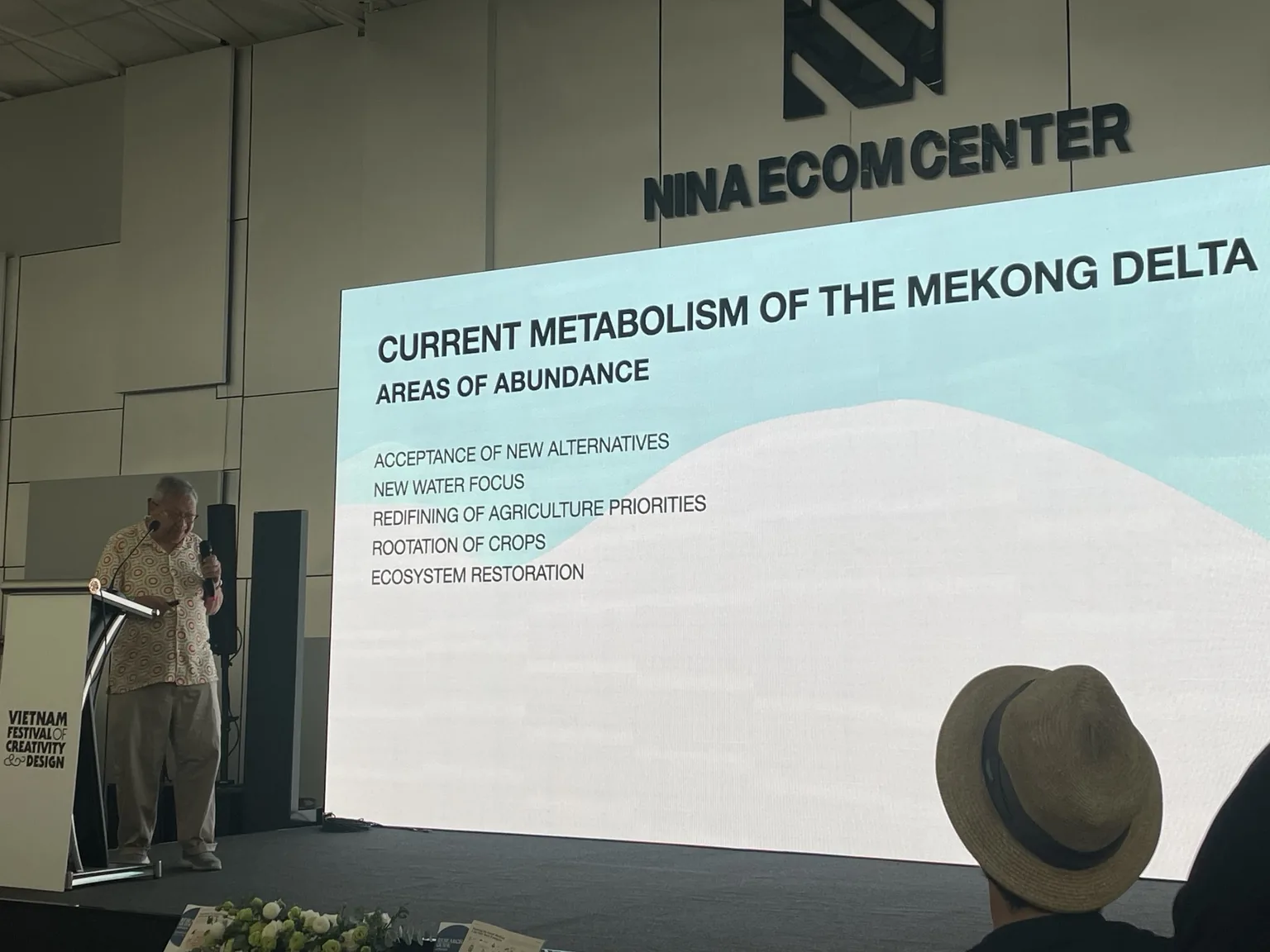
メコンデルタの現在の代謝Current Metabolism of the Mekong Delta

個人的な関係から場所を語るA lived connection

講義は、発表者とメコンデルタとの個人的なつながりと、長年写真を通じて地域を記録してきた経験から始まった。家族や故郷の記憶を通じて、デルタを遠くから分析する対象ではなく、人が暮らし続ける場所として紹介していた。写真は風景だけでなく、生業、移動、家族、日常の営みの関係を読み取る入口となる。

The lecture began with the speaker’s personal connection to the Mekong Delta and years of photographic documentation. Family and memories of home introduced the delta as a place people inhabit, rather than a distant analytical object. Photographs opened a way to read relationships among livelihoods, movement, family and everyday practices.

水がつなぐ生活システムWater as a living system

共有された講義整理では、デルタは約4万km²、約2,000万人規模の地域として説明されている。河川・支流・運河が張り巡らされ、水は農業や漁業の資源であると同時に、交通、市場、住居、仕事、コミュニティ、精神性を結ぶ基盤となる。水・暮らし・生産・生態系を切り離して考えないことが、地域理解の出発点である。

The shared lecture notes describe a delta of roughly 40,000 km² and around 20 million people. Rivers, tributaries and canals provide water for farming and fishing while also connecting transport, markets, housing, work, community and spirituality. Understanding the region begins by holding water, livelihoods, production and ecology together.

日常の実践に残る知恵Knowledge in everyday practices

伝統的な漁法や農業、wet market、フェリー、水辺の住宅、近隣の助け合いは、それぞれ独立した事例ではない。水位や季節の変化のなかで生活を成立させる、相互に結びついた実践である。水と共に生きる知恵は、特別な技術だけでなく日常の調整や関係のなかにも存在する。

Traditional fishing and farming, wet markets, ferries, waterside homes and mutual aid are interconnected practices for living with changes in water levels and seasons. Knowledge of living with water resides in everyday adjustments and relationships as well as specialized techniques.

歴史と政策の転換Historical and policy shifts

1975年の統一、1986年のĐổi Mới、Resolution 120が転換点として挙げられた。共有された整理では、自然を制御して生活を守る発想から、living in harmony with nature=自然と調和して生きる方向への移行が重要とされる。技術やインフラの評価も、物理的な性能だけでなく、暮らしや社会的な関係への作用を含めて考える必要がある。

Reunification in 1975, Đổi Mới in 1986 and Resolution 120 were identified as turning points. The shared account highlights a shift from controlling nature toward living in harmony with nature. Technologies and infrastructure need to be understood through their effects on livelihoods and social relations as well as physical performance.

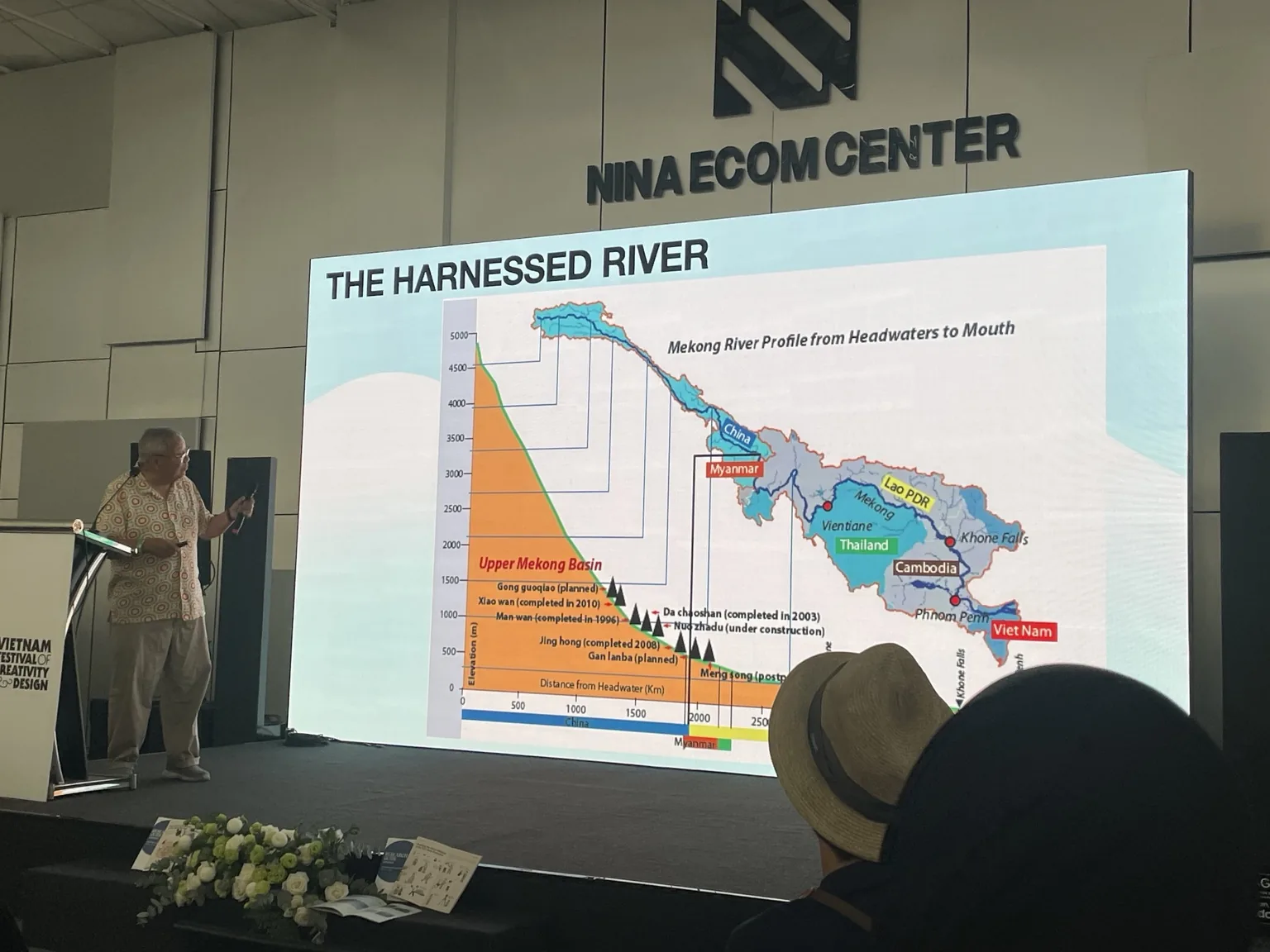
複数の圧力と流域のつながりOverlapping pressures across the basin

塩水化、淡水不足、気候変動、災害、COVID-19など、異なるショックが地域に重なる。さらに、上流のダムや水利用は下流の生活条件とつながるため、デルタの課題はメコン流域全体との関係のなかで考える必要がある。レジリエンスは単に元の状態に戻ることだけでなく、変化する条件のもとで生活を維持し、適応する力として捉えられる。

Salinity intrusion, freshwater scarcity, climate change, disasters and COVID-19 impose overlapping shocks. Upstream dams and water use are connected to downstream living conditions, making the entire Mekong basin relevant to the delta’s challenges. Resilience can be read as the capacity to sustain and adapt life under changing conditions, not simply to return to a previous state.

この土地に住み続けるためにContinuing to live here

中心にある問いは、「環境変化のなかで、人々がこの土地に住み続けるには何が必要か」。巨大な解決策だけを求めるのではなく、伝統知と新技術、生態系と経済、個人とコミュニティの関係から考える。フィールドでは日常の風景を通して、そうした関係がどう維持され、変わっているかを観察する。

The central question is what people need in order to continue living in this place amid environmental change. It calls for attention to relationships between traditional knowledge and new technologies, ecology and economy, individuals and communities. Everyday scenes offer a way to observe how those relationships persist and change.

写真を通じた個人史 — 追加記録A personal history through photography — additional notes

追加の講義整理では、1940年代の誕生と養子としての生い立ち、父の写真工房と4×5カメラ、1960年の欧州行き、Jean ShrimptonやTwiggyに触れた時代の写真文化、米国で写真を学んだ経験、約25年後の帰還が語られている。写真を「光で描く」ものとして捉える経験が、故郷の暮らしを見つめる姿勢につながる。年次と人名は取得できた整理記録の表記で、逐語録との照合は未完了。Additional lecture notes describe a birth in the 1940s, an adoptive upbringing, a father’s photographic workshop and 4×5 camera, travel to Europe in 1960, the photographic culture of Jean Shrimpton and Twiggy, study in the US, and a return roughly 25 years later. Photography as “drawing with light” connects with his attention to life at home. Dates and names follow the retrieved notes and have not been checked against the verbatim recording.

講義本文は共有された文字起こしの整理に基づく再編集で、逐語録ではありません。聞き取りが不明瞭な個人史・固有名詞は断定していません。This is an edited account of the shared lecture notes, not a verbatim transcript. Unclear biographical details and names are not asserted.

講義の統合整理記録を開く・コピーOpen and copy the consolidated lecture notes

逐語録ではありません。Not a verbatim transcript.

個人的な関係から場所を語る / A lived connection講義は、発表者とメコンデルタとの個人的なつながりと、長年写真を通じて地域を記録してきた経験から始まった。家族や故郷の記憶を通じて、デルタを遠くから分析する対象ではなく、人が暮らし続ける場所として紹介していた。写真は風景だけでなく、生業、移動、家族、日常の営みの関係を読み取る入口となる。The lecture began with the speaker’s personal connection to the Mekong Delta and years of photographic documentation. Family and memories of home introduced the delta as a place people inhabit, rather than a distant analytical object. Photographs opened a way to read relationships among livelihoods, movement, family and everyday practices.

水がつなぐ生活システム / Water as a living system共有された講義整理では、デルタは約4万km²、約2,000万人規模の地域として説明されている。河川・支流・運河が張り巡らされ、水は農業や漁業の資源であると同時に、交通、市場、住居、仕事、コミュニティ、精神性を結ぶ基盤となる。水・暮らし・生産・生態系を切り離して考えないことが、地域理解の出発点である。The shared lecture notes describe a delta of roughly 40,000 km² and around 20 million people. Rivers, tributaries and canals provide water for farming and fishing while also connecting transport, markets, housing, work, community and spirituality. Understanding the region begins by holding water, livelihoods, production and ecology together.

日常の実践に残る知恵 / Knowledge in everyday practices伝統的な漁法や農業、wet market、フェリー、水辺の住宅、近隣の助け合いは、それぞれ独立した事例ではない。水位や季節の変化のなかで生活を成立させる、相互に結びついた実践である。水と共に生きる知恵は、特別な技術だけでなく日常の調整や関係のなかにも存在する。Traditional fishing and farming, wet markets, ferries, waterside homes and mutual aid are interconnected practices for living with changes in water levels and seasons. Knowledge of living with water resides in everyday adjustments and relationships as well as specialized techniques.

歴史と政策の転換 / Historical and policy shifts1975年の統一、1986年のĐổi Mới、Resolution 120が転換点として挙げられた。共有された整理では、自然を制御して生活を守る発想から、living in harmony with nature=自然と調和して生きる方向への移行が重要とされる。技術やインフラの評価も、物理的な性能だけでなく、暮らしや社会的な関係への作用を含めて考える必要がある。Reunification in 1975, Đổi Mới in 1986 and Resolution 120 were identified as turning points. The shared account highlights a shift from controlling nature toward living in harmony with nature. Technologies and infrastructure need to be understood through their effects on livelihoods and social relations as well as physical performance.

複数の圧力と流域のつながり / Overlapping pressures across the basin塩水化、淡水不足、気候変動、災害、COVID-19など、異なるショックが地域に重なる。さらに、上流のダムや水利用は下流の生活条件とつながるため、デルタの課題はメコン流域全体との関係のなかで考える必要がある。レジリエンスは単に元の状態に戻ることだけでなく、変化する条件のもとで生活を維持し、適応する力として捉えられる。Salinity intrusion, freshwater scarcity, climate change, disasters and COVID-19 impose overlapping shocks. Upstream dams and water use are connected to downstream living conditions, making the entire Mekong basin relevant to the delta’s challenges. Resilience can be read as the capacity to sustain and adapt life under changing conditions, not simply to return to a previous state.

この土地に住み続けるために / Continuing to live here中心にある問いは、「環境変化のなかで、人々がこの土地に住み続けるには何が必要か」。巨大な解決策だけを求めるのではなく、伝統知と新技術、生態系と経済、個人とコミュニティの関係から考える。フィールドでは日常の風景を通して、そうした関係がどう維持され、変わっているかを観察する。The central question is what people need in order to continue living in this place amid environmental change. It calls for attention to relationships between traditional knowledge and new technologies, ecology and economy, individuals and communities. Everyday scenes offer a way to observe how those relationships persist and change.

写真を通じた個人史 — 追加記録追加の講義整理では、1940年代の誕生と養子としての生い立ち、父の写真工房と4×5カメラ、1960年の欧州行き、Jean ShrimptonやTwiggyに触れた時代の写真文化、米国で写真を学んだ経験、約25年後の帰還が語られている。写真を「光で描く」ものとして捉える経験が、故郷の暮らしを見つめる姿勢につながる。年次と人名は取得できた整理記録の表記で、逐語録との照合は未完了。
English companion notes for this section (edited, not a verbatim transcript):

A lived connection

The lecture began with the speaker’s personal connection to the Mekong Delta and years of photographic documentation. Family and memories of home introduced the delta as a place people inhabit, rather than a distant analytical object. Photographs opened a way to read relationships among livelihoods, movement, family and everyday practices.

Water as a living system

The shared lecture notes describe a delta of roughly 40,000 km² and around 20 million people. Rivers, tributaries and canals provide water for farming and fishing while also connecting transport, markets, housing, work, community and spirituality. Understanding the region begins by holding water, livelihoods, production and ecology together.

Knowledge in everyday practices

Traditional fishing and farming, wet markets, ferries, waterside homes and mutual aid are interconnected practices for living with changes in water levels and seasons. Knowledge of living with water resides in everyday adjustments and relationships as well as specialized techniques.

Historical and policy shifts

Reunification in 1975, Đổi Mới in 1986 and Resolution 120 were identified as turning points. The shared account highlights a shift from controlling nature toward living in harmony with nature. Technologies and infrastructure need to be understood through their effects on livelihoods and social relations as well as physical performance.

Overlapping pressures across the basin

Salinity intrusion, freshwater scarcity, climate change, disasters and COVID-19 impose overlapping shocks. Upstream dams and water use are connected to downstream living conditions, making the entire Mekong basin relevant to the delta’s challenges. Resilience can be read as the capacity to sustain and adapt life under changing conditions, not simply to return to a previous state.

Continuing to live here

The central question is what people need in order to continue living in this place amid environmental change. It calls for attention to relationships between traditional knowledge and new technologies, ecology and economy, individuals and communities. Everyday scenes offer a way to observe how those relationships persist and change.

Current Metabolism of the Mekong Delta

The Harnessed River

A personal history through photography — additional notes

Additional lecture notes describe a birth in the 1940s, an adoptive upbringing, a father’s photographic workshop and 4×5 camera, travel to Europe in 1960, the photographic culture of Jean Shrimpton and Twiggy, study in the US, and a return roughly 25 years later. Photography as “drawing with light” connects with his attention to life at home. Dates and names follow the retrieved notes and have not been checked against the verbatim recording.

KEY POINT

The delta is a living system of inseparable water, ecology, livelihoods and society. Ask what sustains habitation through everyday knowledge and basin-wide relationships.

This is an edited account of the shared lecture notes, not a verbatim transcript. Unclear biographical details and names are not asserted.

Copy
文字起こし原文についてAbout the original transcript

当初共有された講義記録は整理文です。逐語録としては扱っていません。The originally shared lecture record was an edited account and is not treated as a verbatim transcript.

10:30〜 · Cảm Ứng dowsing over lunch

Cảm Ứngと3つの方法Cảm Ứng and three methods

配布表は10:30から13:30までの枠に配置されていますが、枠内の印字は「10:30–11:30」。両方を保持し、終了時刻は確定していません。以下の方法は同じセッション内の整理で、実施順序を示しません。The schedule block extends from 10:30 to 13:30 but is printed “10:30–11:30.” Both are retained; the end time is not confirmed. The methods below belong to the same session and are not listed in their order of practice.

Cảm Ứng / Digital Dowsing

環境をmediumとして捉えるEnvironment as medium

Cảm Ứngは知覚と応答の不可分性に関わる。変化する環境を読み、そのつど受け取ったものに応答する。ここでいうmediaは情報機器だけではない。水、身体、物質、空気、技術などが関係を媒介する環境そのものをmediumとして捉える。

Cảm Ứng concerns the inseparability of perception and response: reading changing conditions and responding to what arrives. Media here extends beyond devices to the environment itself as a medium through which water, bodies, matter, air and technologies relate.

非抽出的に近づくComing closer without extraction

問いは「このmedia ecologyに、非抽出的に参加するにはどうするか」。自分を環境の外に置いて情報を持ち帰るだけでなく、その場所の一部として影響を受ける。感覚、記録装置、言語、他者との対話を含め、自分がどう知っているのかもリサーチに含める。

The question is how to participate in this media ecology in a non-extractive manner. The researcher is affected as part of the place. Senses, recording devices, language and dialogue bring how we know into the research itself.

Three methods, one field

今回の整理では、River Scores/Indexical Tracing/Group Methodを3つの方法として扱う。以前独立項目にしていたCompound Tracesは、今回の補足に合わせてIndexical Tracingに関連するワークとしてまとめ、内容と写真は残している。

This edition uses River Scores, Indexical Tracing and Group Method as the three methods. Following the latest clarification, Compound Traces is retained as related work within Indexical Tracing rather than a fourth independent method.

同じ場所に向き合うENCOUNTER THE SAME PLACE
個人での探究 / INDIVIDUAL INQUIRY

01 River Scores

一人で、感覚に留まる
一人で、感覚に留まるIndividual · contemplative

感じる・留まる・振り返るAttend, stay and reflect.

02 Indexical Tracing

一人で、痕跡を追う
一人で、痕跡を追うIndividual · traces and evidence

観察する・記録する・辿るObserve, record and trace.

共同での探究 / SHARED INQUIRY

03 Group Method

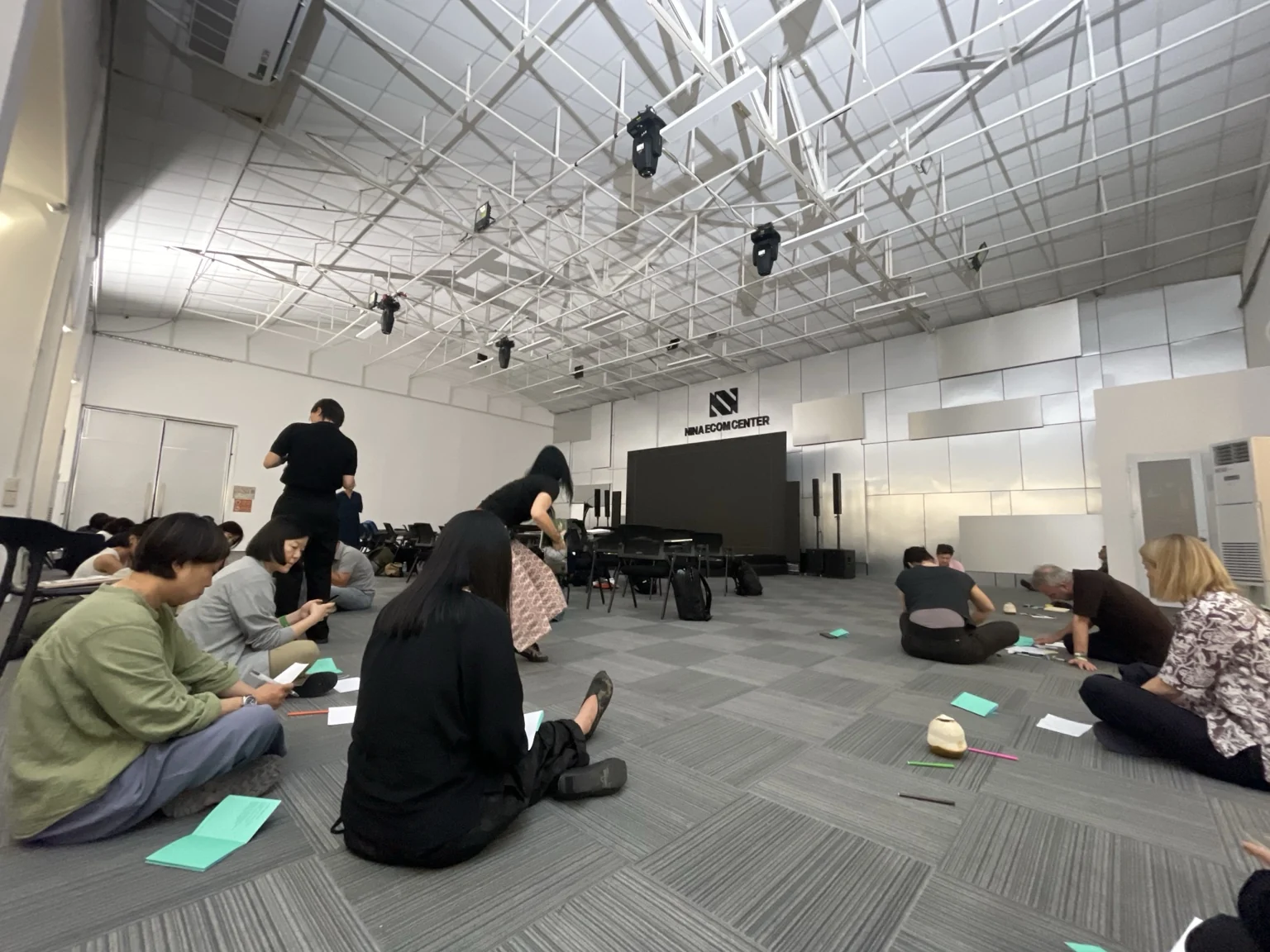
グループワークの記録写真
グループワークの記録写真Workshop photo · group inquiry

問いを共有する・共同調査する・対話するShare a question, investigate and discuss.

感覚・痕跡 ⇄ 共有する問い・対話
Sensory experience & traces ⇄ Shared questions & dialogue
対話で生まれた問いを、再び個人の観察へ。個人の気づきを、共同の洞察へ。
New questions return to individual observation; individual encounters inform collective insight.
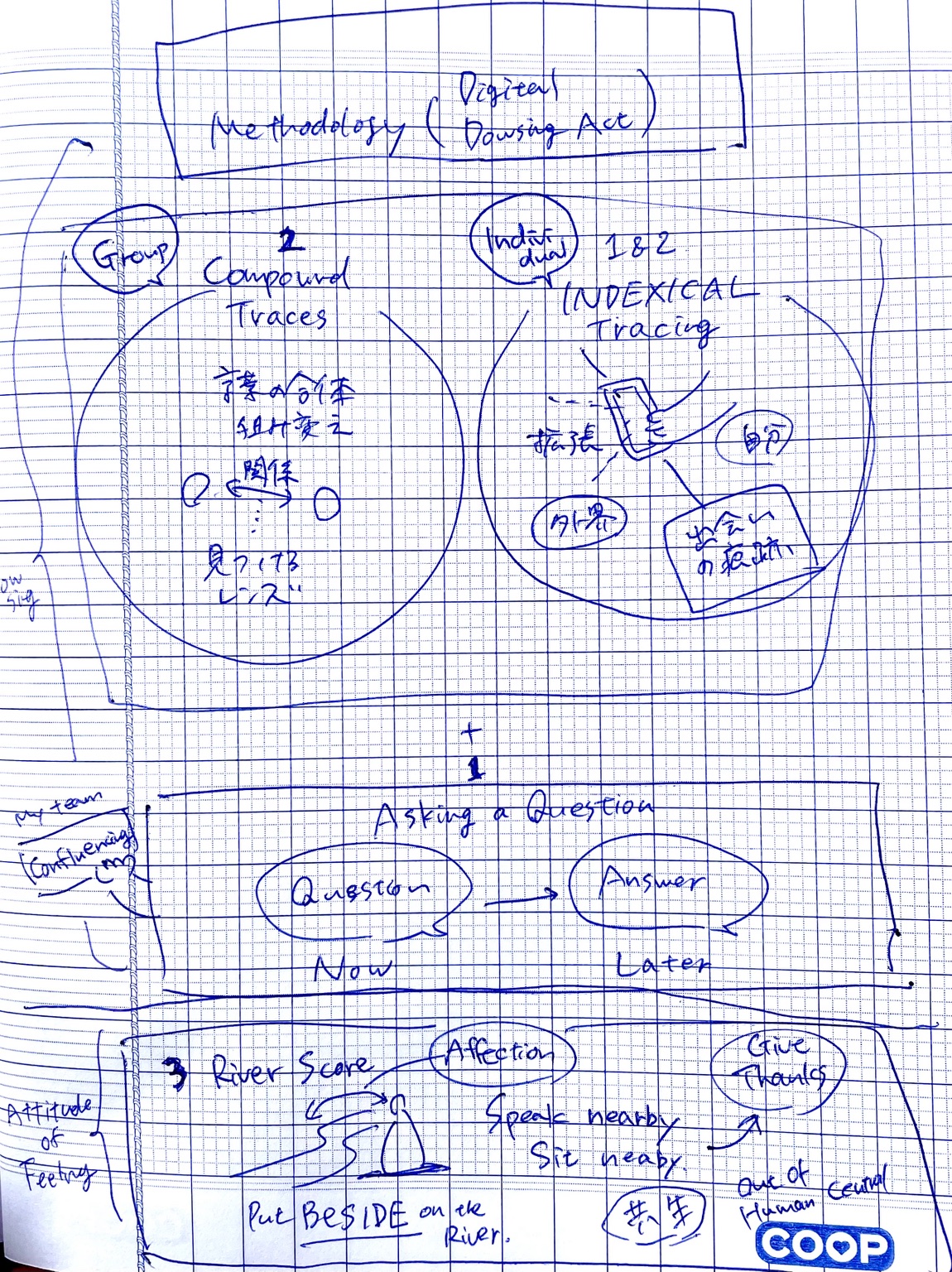
メソッドを山田の理解で図示したもの / Methods illustrated as understood by Suika
メソッドを山田の理解で図示したものMethods illustrated as understood by Suika.

関係図は今回の3方法のまとめをもとにした整理で、必須の実施順序を示すものではありません。Group Methodの写真は提供されたグループワーク風景です。The diagram synthesizes the supplied three-method summary; it is not a prescribed sequence. The Group Method image documents the supplied workshop scene.

River Scores

感覚と近接から始めるBegin with proximity

一人で川や場所のそばに身体を置き、より瞑想的・感覚的に向き合う方法。対象について説明する前に、自分がどう座り、何を感じ、どのように影響を受けるかに注意を向ける。

An individual, contemplative and sensory way of being beside a river or place. Before explaining the subject, attend to how you sit, what you sense and how you are affected.

Scoreを身体で実行するEnact the score

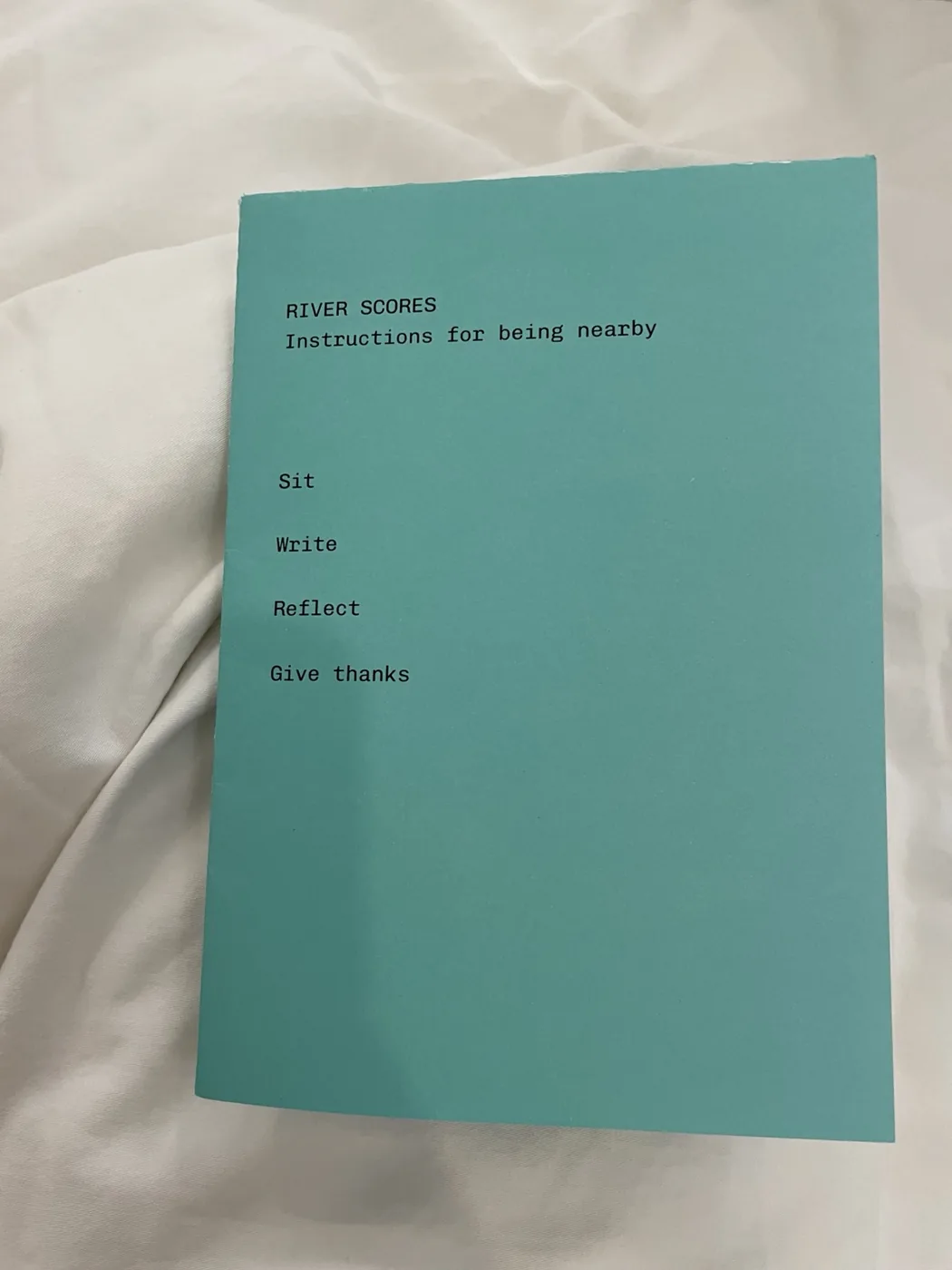
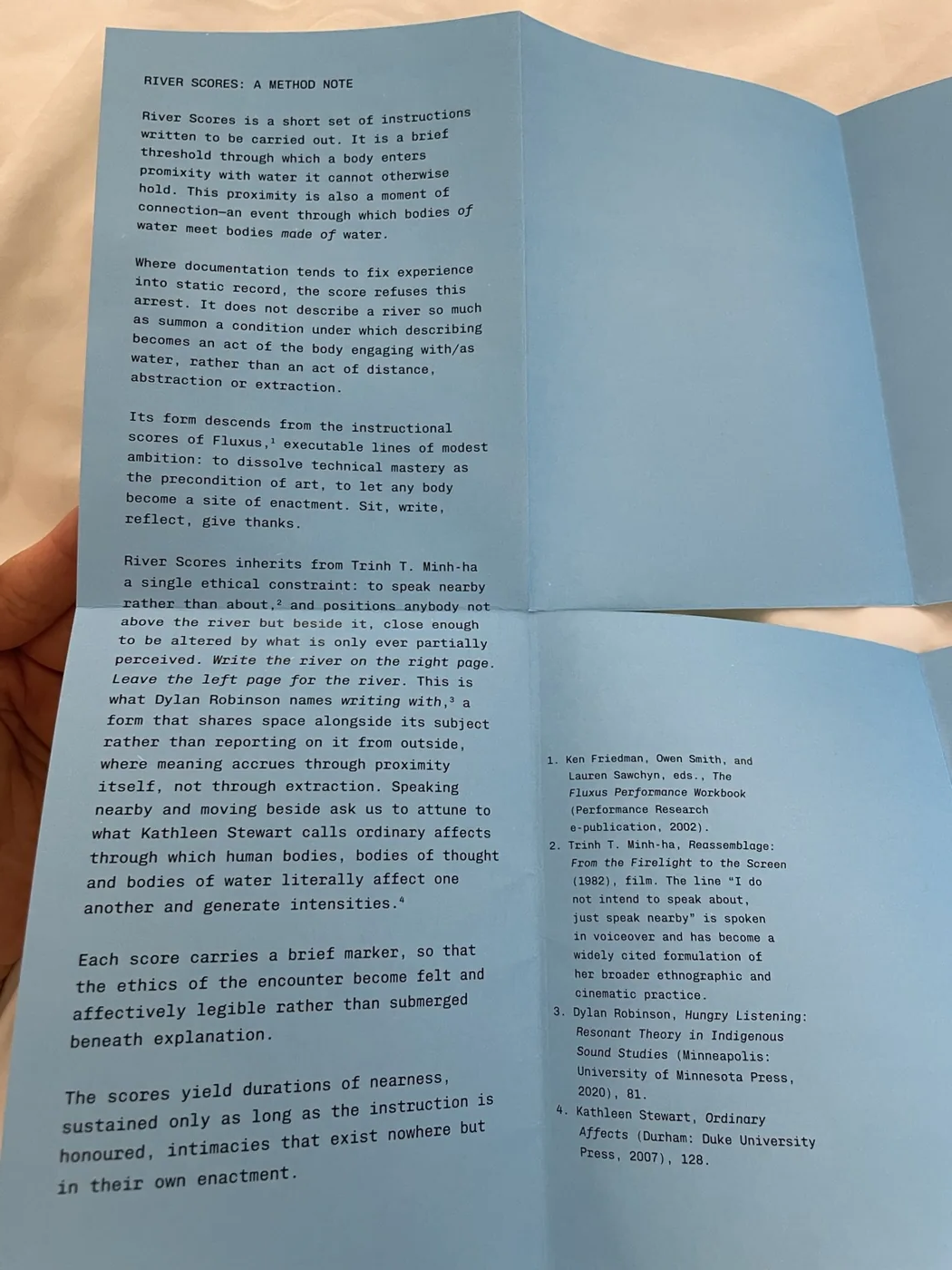
Fluxusのinstructional scoreを背景にした短い指示を実行する。基本はSit → Write → Reflect → Give thanks。座ることを、書く・描く・voice memo・録音・写真・動きなど、選んだ方法で記録する。記録は体験を固定するためだけでなく、その出会いに応答する行為となる。

Enact short instructions drawing on the instructional score tradition of Fluxus: Sit → Write → Reflect → Give thanks. Document sitting through writing, drawing, voice notes, audio, photographs or movement. Documentation responds to the encounter rather than merely fixing the experience.

そばから語るSpeak nearby

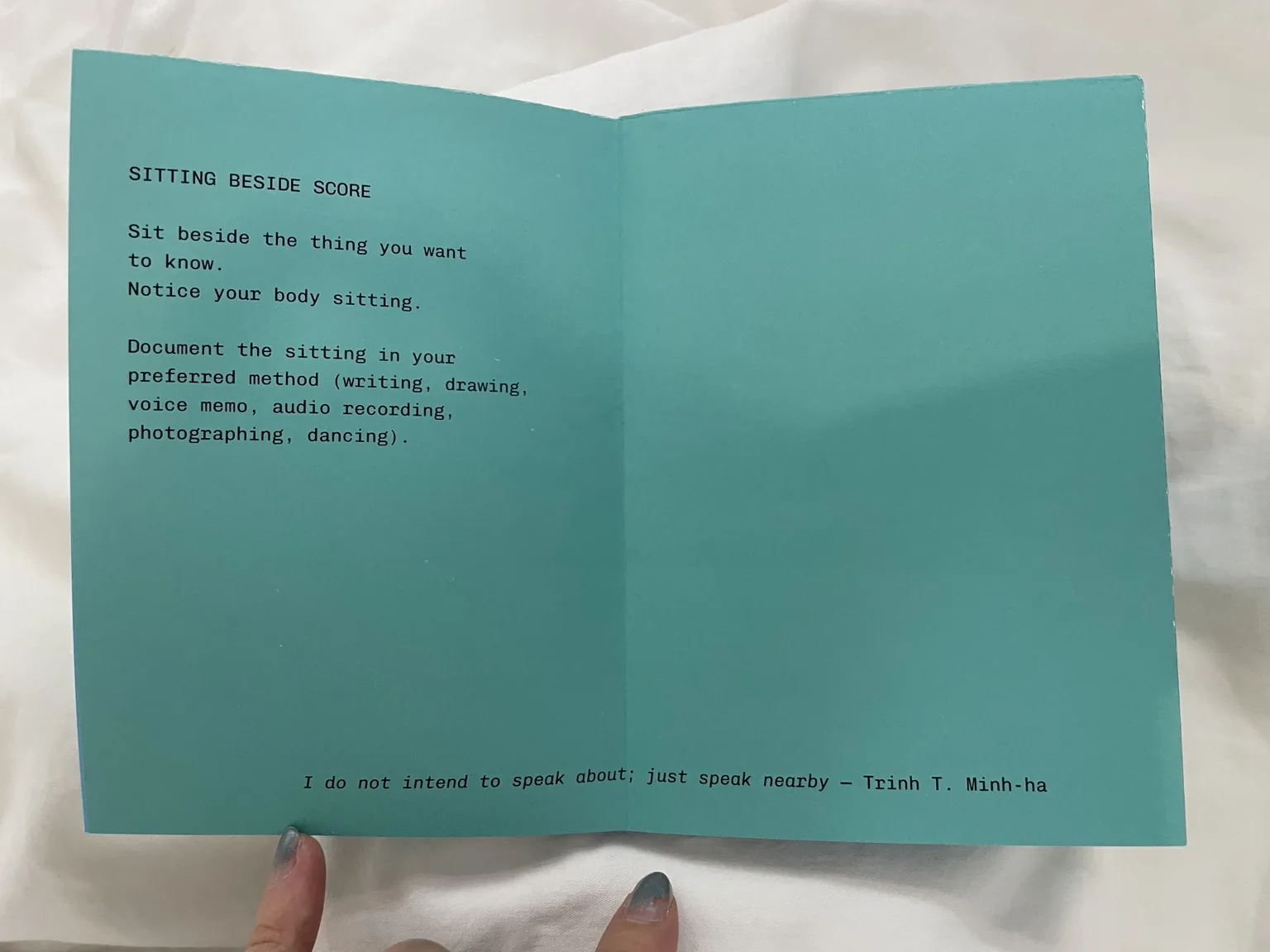
重要な姿勢は“speak nearby” / “sit beside”。川を上から見渡し、距離を置いて説明するのではなく、そばに留まる。身体と水が近接したときのaffectを知識として考え、観察者と対象の関係そのものに注意する。

The orientation is “speak nearby” / “sit beside”. Stay beside the river instead of explaining it from a position of distance. Bodily affect and proximity become ways of knowing, directing attention to the observer–subject relationship.

一日のなかに分けて行うSpread the practice across the day

後のフィールドワークでの補足では、書くことや振り返りを一度に済ませる必要はないとされた。書けるときに書き、フェリーの移動中に振り返り、夕食時に共有するなど、一日を通して実践を続けることができる。

Later fieldwork guidance allowed writing and reflection to unfold at different moments: writing when possible, reflecting on a ferry and sharing at dinner. The practice can extend across the day.

Indexical Tracing

身体が先、デバイスが後Senses before the device

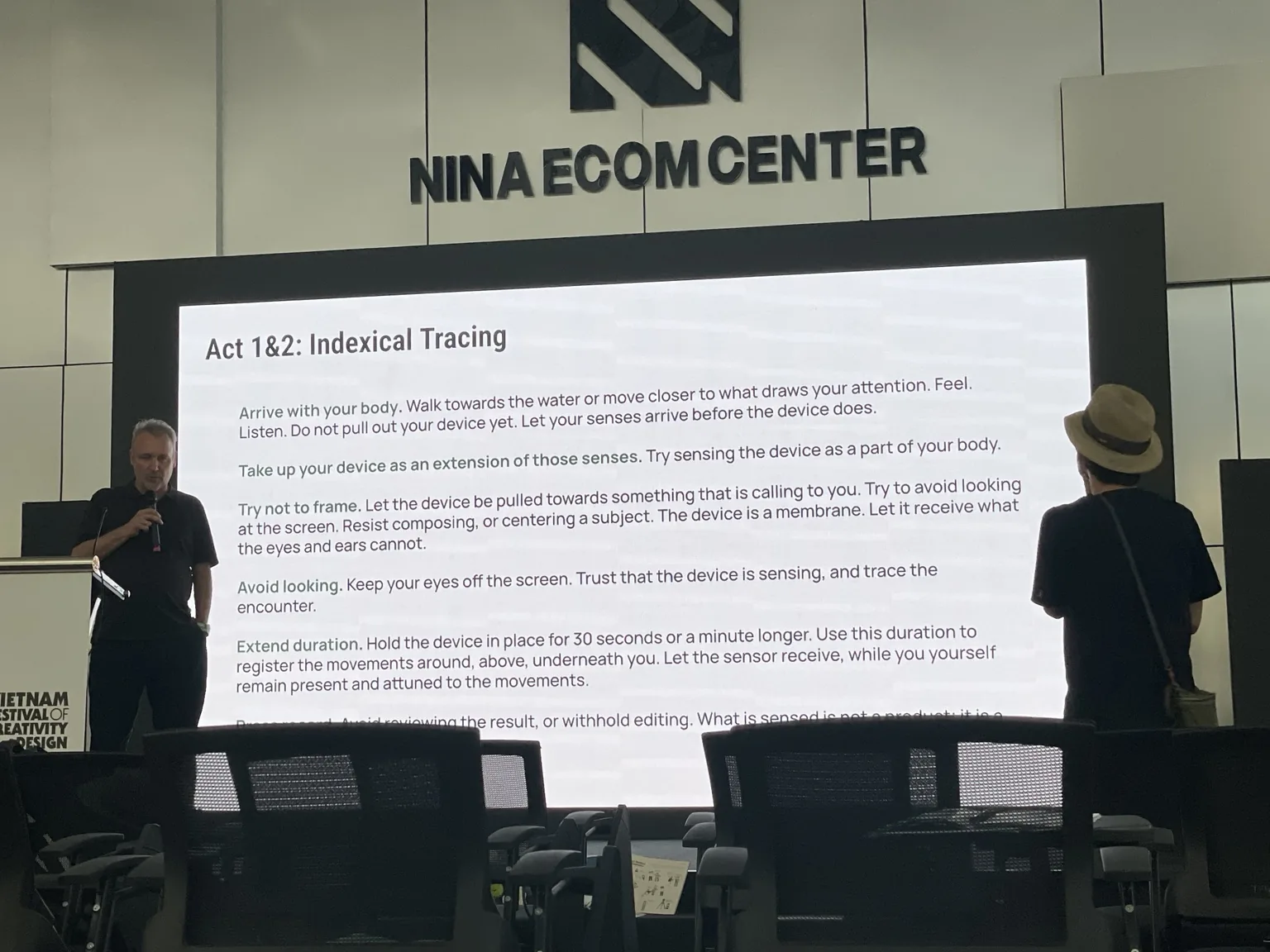
まず“Arrive with your body.”。スマホを出す前に感じ、聴く。音、匂い、振動、周囲の動き、atmosphereに注意を向ける。身体が引きつけられたものへ近づき、感覚がその場所に到着してからデバイスを使う。

Start with “Arrive with your body.” Feel and listen before taking out the phone. Attend to sound, smell, vibration, movement and atmosphere; approach what draws your body’s attention, then bring the device into the encounter.

フレーミングの習慣を外すLoosen the habit of framing

講師は、画面を見ずに撮っても、自分の目が環境をフレーミングしてしまうと気づいた。そこで画面を見ない・構図をつくらない・何が写るか想像しすぎない制約を使う。「よい写真」を選ぶ判断より、身体が何に反応したかを出発点にする。

The lecturer noticed that the eyes kept framing the environment even without looking at the phone. The practice asks you to keep your eyes off the screen, avoid composing and resist anticipating the image. Begin with what the body responds to rather than what would make a good photograph.

Membraneと痕跡A membrane for traces

デバイスは身体と感覚のextension、環境との間のmembrane=膜として扱われる。ブレ、被写体の切れ、傾き、偶然の写り込みを直ちに失敗としない。画像を、身体・環境・技術のあいだに生じたencounterのtraceとして受け取る。

Treat the device as an extension of body and senses, a membrane between body and environment. Blur, cropping, tilting and unexpected details need not be rejected as failures. Receive the image as a trace of an encounter among body, environment and technology.

Evidenceと時間Evidence and duration

今回の整理では、個人の観察において痕跡や具体的なevidenceを意識し、記録して辿る点が強調される。身体で感じた経験と具体的な記録をつなぐことが大切であり、「構図を決めない」という実践と矛盾するものではない。30秒〜1分以上留まるなど、encounterの時間を伸ばす指示もあった。

The revised summary emphasizes recording and following traces and concrete evidence during individual observation. Relating bodily experience to a material record is compatible with the practice of not composing. Instructions also asked participants to extend the encounter, staying for thirty seconds, a minute or longer.

注意を向ける問いA prompt for attention

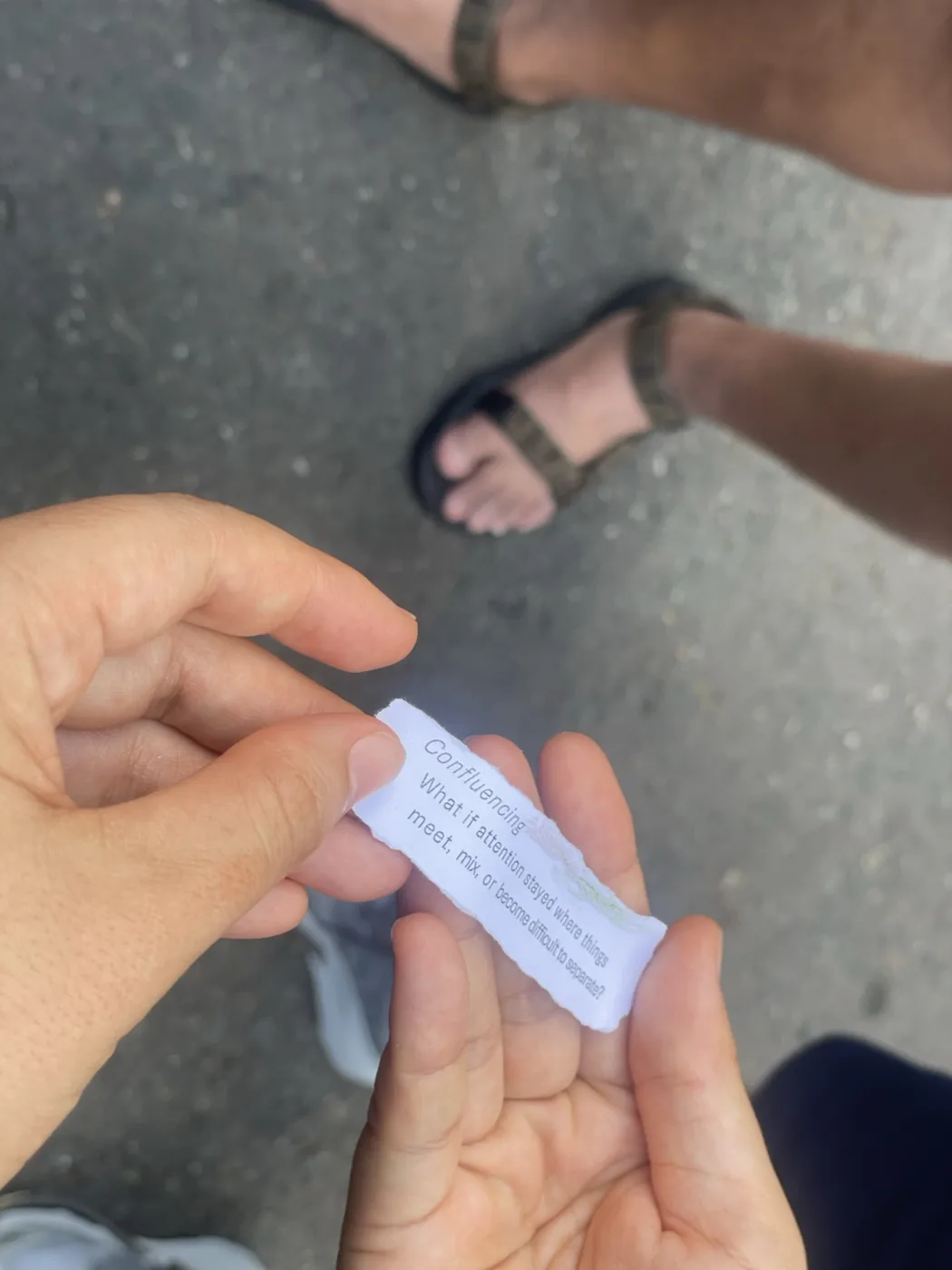
配布されたConfluencingの問いは、「物事が出会い、混ざり、分離しにくくなる場所に注意を留めたらどうなるか」。何を発見すべきかを指定するのではなく、注意の向きを変えるためのpromptとして使われていた。

The Confluencing prompt asks what happens when attention stays where things meet, mix or become difficult to separate. It redirects attention rather than prescribing what must be found.

関連ワーク:Compound TracesRelated exercise

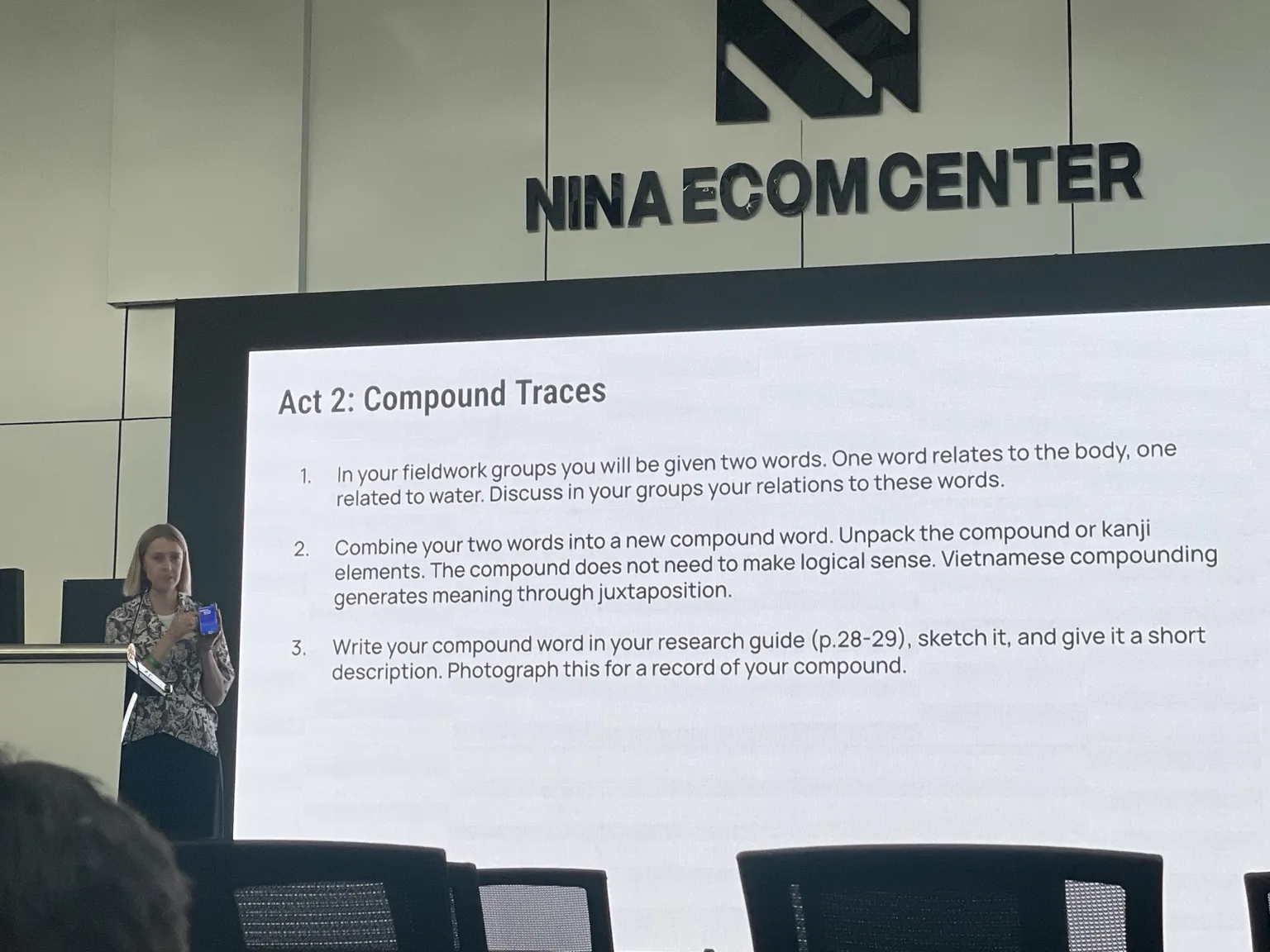
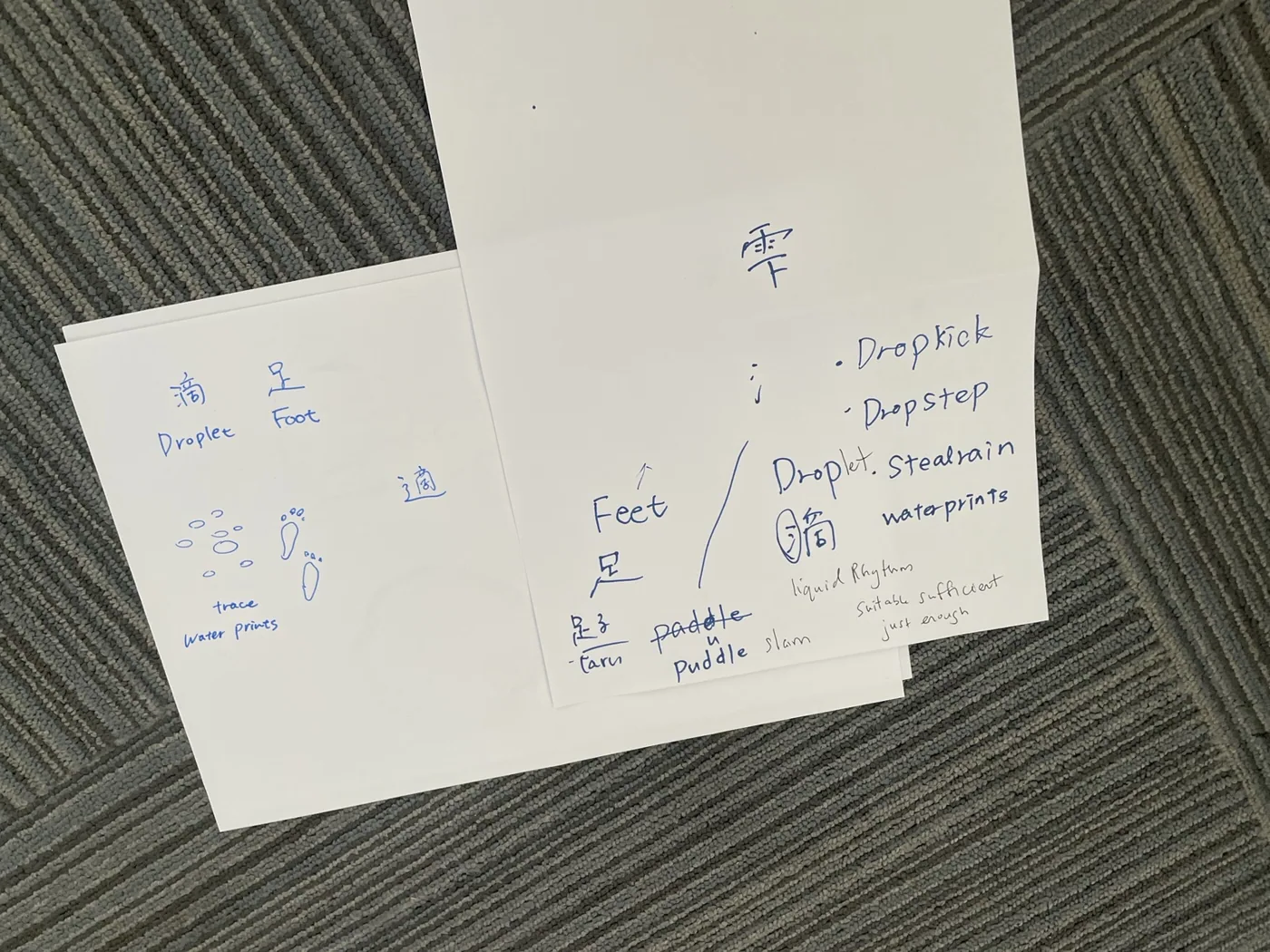
以前独立メソッドとして掲載していた内容を、今回の補足に沿ってここに統合する。水と身体の言葉を一つずつ選び、compoundをつくる。言葉をランダムに選ぶことで、自分の既存の関心に合った答えだけを選ぶことを避ける。今回の例はDROP × FEET(滴 × 足)だった。

This material is integrated here following the latest clarification. Choose one water-related word and one body-related word, then form a compound. Chance selection interrupts the tendency to select only familiar interests. The example was DROP × FEET.

論理に縛られないレンズA lens beyond literal logic

Compoundは論理的に意味が通らなくてもよい。並置によって意味を生むベトナム語の複合、漢字、言語間のズレを想像の手がかりにする。できた言葉を研究ガイドに書き、sketchと短い説明を添え、写真で残す。濡れた足跡、泥、水に触れる足、滴と歩行のリズムなどは、このレンズで連想できる例であり、唯一の正解ではない。

The compound does not have to make logical sense. Vietnamese compounding, characters and gaps between languages serve as prompts. Write the compound in the research guide, sketch it, add a short description and photograph it. Wet footprints, mud, feet touching water and rhythms of dripping and walking are possible associations, not prescribed answers.

Group Method

共通の問いを持つShare a question

グループで一つの問いや課題を共同調査し、対話を通じて洞察を得る方法。個人で行うRiver ScoresやIndexical Tracingと比べ、問いと観察を他者と共有することが中心にある。ここでは、今回共有された整理をもとにその役割を示している。

A method for investigating a shared question or issue as a group and developing insights through dialogue. In contrast to the two individual practices, the question and observations are shared with others. This account follows the newly supplied summary.

個人の観察と共同の洞察Individual observations, shared insight

関係図は、感覚的な気づきや具体的な記録を共同の問いに持ち込み、対話から新しい観察の手がかりを得る関係を表す。同じ場所でも異なる注意が働くことを活かし、個人の印象をそのままグループの結論とせず、互いの経験を照らし合わせる、というつなぎ方が考えられる。

The diagram connects sensory experiences and concrete records with shared questions, allowing dialogue to generate new directions for observation. It suggests using differences in attention within the same place, comparing experiences rather than automatically making one person’s impression the group’s conclusion.

後段は3方法の関係を説明するための編集上の整理です。Group Methodの詳細な手順や役割分担は、今回の要約だけでは確認できないため付加していません。The relationship described above is an editorial synthesis. Detailed roles or procedural requirements are not added where the supplied summary does not establish them.

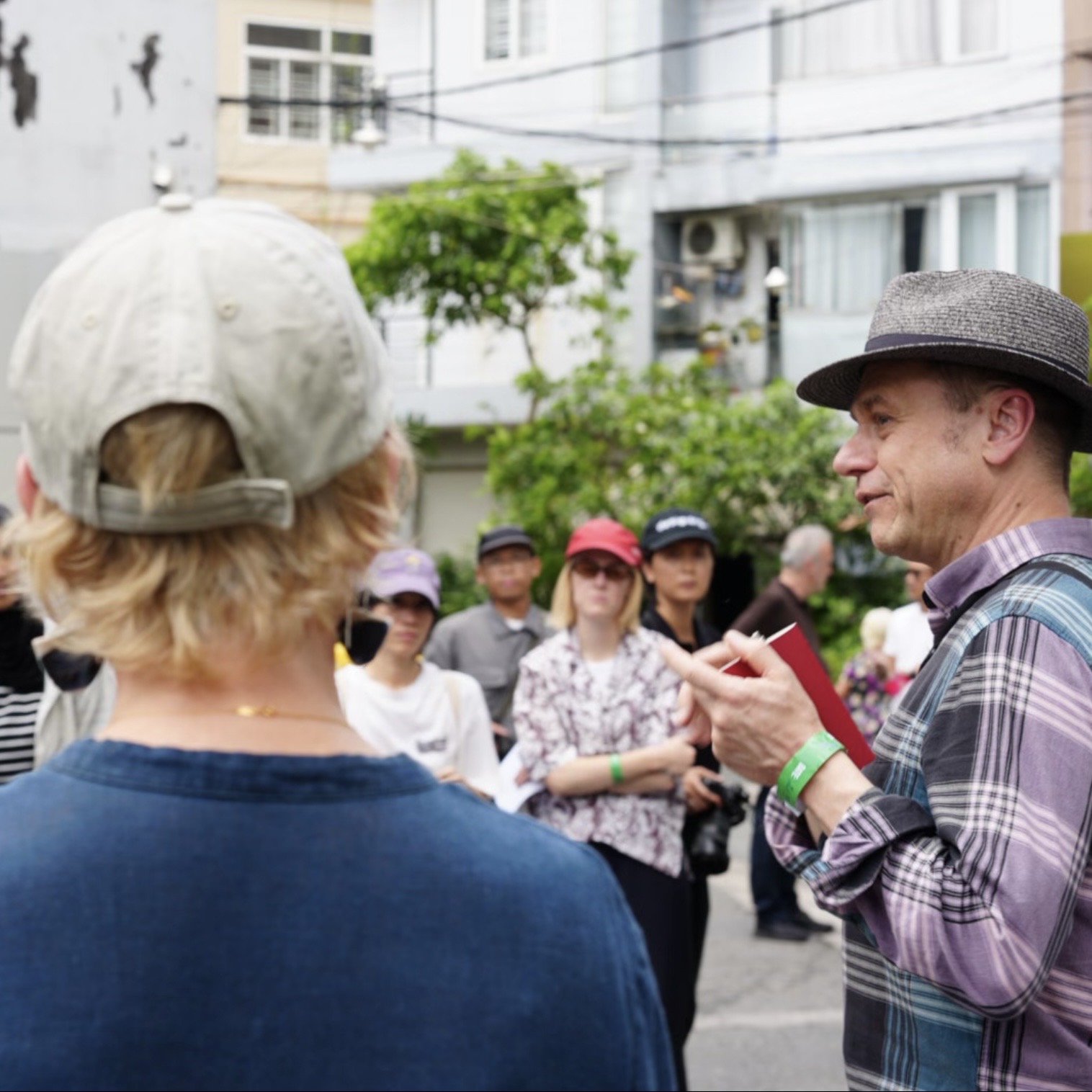
共有されたグループワーク風景
共有されたグループワーク風景Supplied group workshop scene

Using the methods

後の説明では、方法は参加者が選び、使い方を決められるメニューとして示された。専門的・個人的に重要だと思う写真を撮ることも優先してよい。方法の厳密な遂行だけが目的ではなく、その場所で得られる経験と自分のagencyが大切にされる。

Later guidance framed the methods as a menu participants could choose and adapt. Photographing something important to professional or personal interests was encouraged. Methodological compliance is not the only purpose: the experience and participants’ agency matter.

旧版の方法論整理文を開く・コピーOpen and copy the earlier methodology notes

逐語録ではありません。Not a verbatim transcript.

02Cảm Ứng / Digital Dowsing知覚と応答を切り離さない環境をmediumとして捉える / Environment as mediumCảm Ứngは知覚と応答の不可分性に関わる。変化する環境を読み、そのつど受け取ったものに応答する。ここでいうmediaは情報機器だけではない。水、身体、物質、空気、技術などが関係を媒介する環境そのものをmediumとして捉える。Cảm Ứng concerns the inseparability of perception and response: reading changing conditions and responding to what arrives. Media here extends beyond devices to the environment itself as a medium through which water, bodies, matter, air and technologies relate.非抽出的に近づく / Coming closer without extraction問いは「このmedia ecologyに、非抽出的に参加するにはどうするか」。自分を環境の外に置いて情報を持ち帰るだけでなく、その場所の一部として影響を受ける。感覚、記録装置、言語、他者との対話を含め、自分がどう知っているのかもリサーチに含める。The question is how to participate in this media ecology in a non-extractive manner. The researcher is affected as part of the place. Senses, recording devices, language and dialogue bring how we know into the research itself.まとめ / KEY POINT環境への関わり方を調整し、参加し、影響を受け、応答しながら知る。Adjust the way you engage: know through participation, being affected and responding.

03Three methods, one field3つの方法の関係今回の整理では、River Scores/Indexical Tracing/Group Methodを3つの方法として扱う。以前独立項目にしていたCompound Tracesは、今回の補足に合わせてIndexical Tracingに関連するワークとしてまとめ、内容と写真は残している。This edition uses River Scores, Indexical Tracing and Group Method as the three methods. Following the latest clarification, Compound Traces is retained as related work within Indexical Tracing rather than a fourth independent method.同じ場所に向き合う / ENCOUNTER THE SAME PLACE個人での探究 / INDIVIDUAL INQUIRY01 River Scores一人で、感覚に留まるIndividual · contemplative感じる・留まる・振り返るAttend, stay and reflect.02 Indexical Tracing一人で、痕跡を追うIndividual · traces and evidence観察する・記録する・辿るObserve, record and trace.共同での探究 / SHARED INQUIRY03 Group Methodグループワークの記録写真Workshop photo · group inquiry問いを共有する・共同調査する・対話するShare a question, investigate and discuss.感覚・痕跡 ⇄ 共有する問い・対話Sensory experience & traces ⇄ Shared questions & dialogue対話で生まれた問いを、再び個人の観察へ。個人の気づきを、共同の洞察へ。New questions return to individual observation; individual encounters inform collective insight.関係図は今回の3方法のまとめをもとにした整理で、必須の実施順序を示すものではありません。Group Methodの写真は提供されたグループワーク風景です。The diagram synthesizes the supplied three-method summary; it is not a prescribed sequence. The Group Method image documents the supplied workshop scene.

04River Scores一人で場所や川と向き合う感覚と近接から始める / Begin with proximity一人で川や場所のそばに身体を置き、より瞑想的・感覚的に向き合う方法。対象について説明する前に、自分がどう座り、何を感じ、どのように影響を受けるかに注意を向ける。An individual, contemplative and sensory way of being beside a river or place. Before explaining the subject, attend to how you sit, what you sense and how you are affected.Scoreを身体で実行する / Enact the scoreFluxusのinstructional scoreを背景にした短い指示を実行する。基本はSit → Write → Reflect → Give thanks。座ることを、書く・描く・voice memo・録音・写真・動きなど、選んだ方法で記録する。記録は体験を固定するためだけでなく、その出会いに応答する行為となる。Enact short instructions drawing on the instructional score tradition of Fluxus: Sit → Write → Reflect → Give thanks. Document sitting through writing, drawing, voice notes, audio, photographs or movement. Documentation responds to the encounter rather than merely fixing the experience.Speak nearby / そばから語る重要な姿勢は“speak nearby” / “sit beside”。川を上から見渡し、距離を置いて説明するのではなく、そばに留まる。身体と水が近接したときのaffectを知識として考え、観察者と対象の関係そのものに注意する。The orientation is “speak nearby” / “sit beside”. Stay beside the river instead of explaining it from a position of distance. Bodily affect and proximity become ways of knowing, directing attention to the observer–subject relationship.一日のなかに分けて行う / Spread the practice across the day後のフィールドワークでの補足では、書くことや振り返りを一度に済ませる必要はないとされた。書けるときに書き、フェリーの移動中に振り返り、夕食時に共有するなど、一日を通して実践を続けることができる。Later fieldwork guidance allowed writing and reflection to unfold at different moments: writing when possible, reflecting on a ferry and sharing at dinner. The practice can extend across the day.Sitting besideの指示(文字方向を補正)Sitting beside score, oriented for readingRiver Scoresの背景資料River Scores method noteまとめ / KEY POINT観察の中心を「対象の説明」からそばにいる身体の経験へ移す。Move attention from explanation toward the bodily experience of being beside.

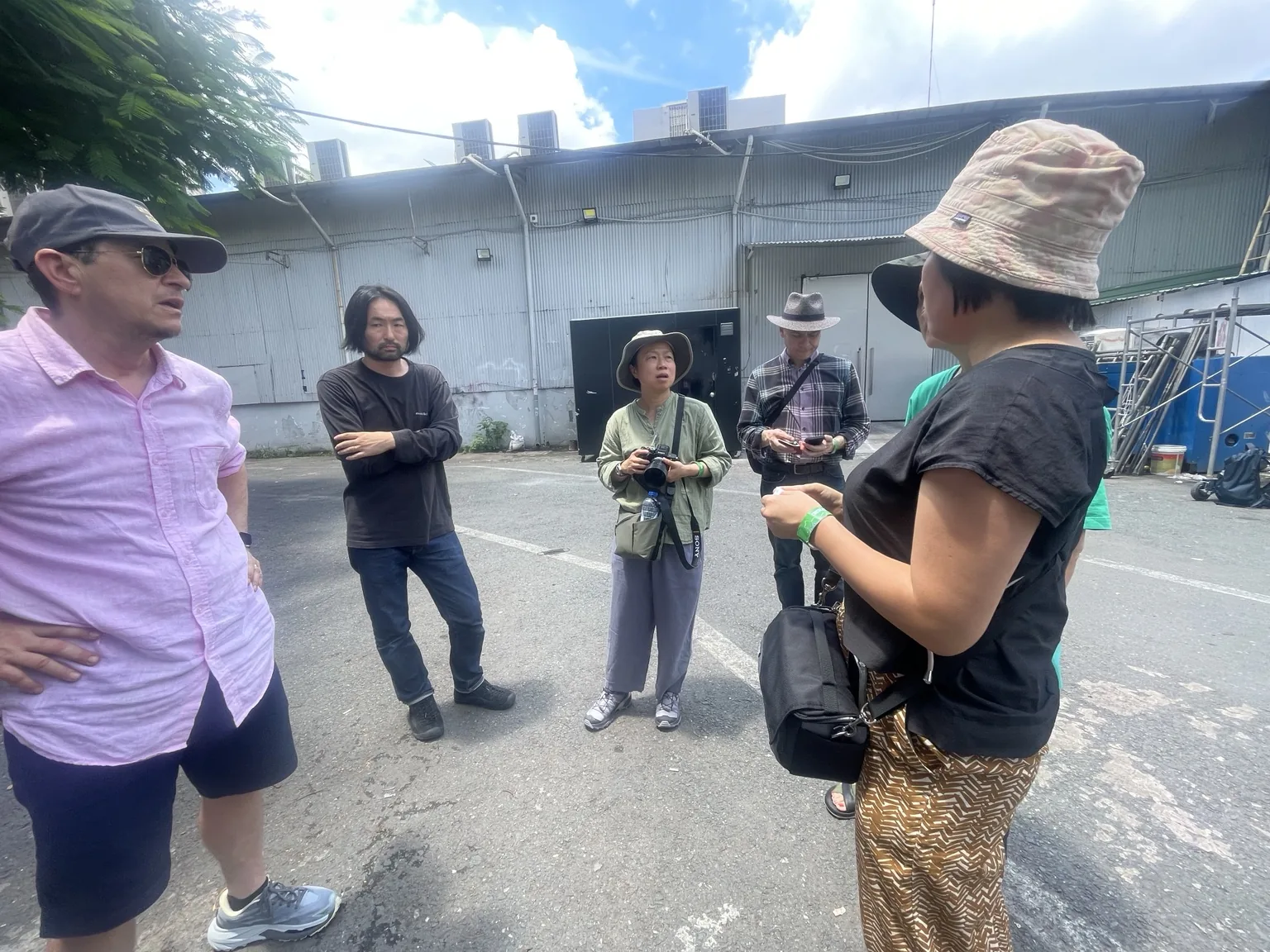
05Indexical Tracing個人で痕跡・evidenceを記録し、辿る身体が先、デバイスが後 / Senses before the deviceまず“Arrive with your body.”。スマホを出す前に感じ、聴く。音、匂い、振動、周囲の動き、atmosphereに注意を向ける。身体が引きつけられたものへ近づき、感覚がその場所に到着してからデバイスを使う。Start with “Arrive with your body.” Feel and listen before taking out the phone. Attend to sound, smell, vibration, movement and atmosphere; approach what draws your body’s attention, then bring the device into the encounter.フレーミングの習慣を外す / Loosen the habit of framing講師は、画面を見ずに撮っても、自分の目が環境をフレーミングしてしまうと気づいた。そこで画面を見ない・構図をつくらない・何が写るか想像しすぎない制約を使う。「よい写真」を選ぶ判断より、身体が何に反応したかを出発点にする。The lecturer noticed that the eyes kept framing the environment even without looking at the phone. The practice asks you to keep your eyes off the screen, avoid composing and resist anticipating the image. Begin with what the body responds to rather than what would make a good photograph.Membraneと痕跡 / A membrane for tracesデバイスは身体と感覚のextension、環境との間のmembrane=膜として扱われる。ブレ、被写体の切れ、傾き、偶然の写り込みを直ちに失敗としない。画像を、身体・環境・技術のあいだに生じたencounterのtraceとして受け取る。Treat the device as an extension of body and senses, a membrane between body and environment. Blur, cropping, tilting and unexpected details need not be rejected as failures. Receive the image as a trace of an encounter among body, environment and technology.Evidenceと時間 / Evidence and duration今回の整理では、個人の観察において痕跡や具体的なevidenceを意識し、記録して辿る点が強調される。身体で感じた経験と具体的な記録をつなぐことが大切であり、「構図を決めない」という実践と矛盾するものではない。30秒〜1分以上留まるなど、encounterの時間を伸ばす指示もあった。The revised summary emphasizes recording and following traces and concrete evidence during individual observation. Relating bodily experience to a material record is compatible with the practice of not composing. Instructions also asked participants to extend the encounter, staying for thirty seconds, a minute or longer.注意を向ける問い / A prompt for attention配布されたConfluencingの問いは、「物事が出会い、混ざり、分離しにくくなる場所に注意を留めたらどうなるか」。何を発見すべきかを指定するのではなく、注意の向きを変えるためのpromptとして使われていた。The Confluencing prompt asks what happens when attention stays where things meet, mix or become difficult to separate. It redirects attention rather than prescribing what must be found.屋外での説明Outdoor instructionsConfluencingのカードConfluencing prompt関連ワーク:Compound Traces / Related exercise以前独立メソッドとして掲載していた内容を、今回の補足に沿ってここに統合する。水と身体の言葉を一つずつ選び、compoundをつくる。言葉をランダムに選ぶことで、自分の既存の関心に合った答えだけを選ぶことを避ける。今回の例はDROP × FEET(滴 × 足)だった。This material is integrated here following the latest clarification. Choose one water-related word and one body-related word, then form a compound. Chance selection interrupts the tendency to select only familiar interests. The example was DROP × FEET.論理に縛られないレンズ / A lens beyond literal logicCompoundは論理的に意味が通らなくてもよい。並置によって意味を生むベトナム語の複合、漢字、言語間のズレを想像の手がかりにする。できた言葉を研究ガイドに書き、sketchと短い説明を添え、写真で残す。濡れた足跡、泥、水に触れる足、滴と歩行のリズムなどは、このレンズで連想できる例であり、唯一の正解ではない。The compound does not have to make logical sense. Vietnamese compounding, characters and gaps between languages serve as prompts. Write the compound in the research guide, sketch it, add a short description and photograph it. Wet footprints, mud, feet touching water and rhythms of dripping and walking are possible associations, not prescribed answers.当日のスライド:Act 2, Compound TracesOriginal slide label retained言葉を組み合わせた記録Notes on combining wordsまとめ / KEY POINT身体の反応を起点に、注意を引いた関係を痕跡とevidenceとして記録し、辿る。Compoundのワークは、その注意を調整するレンズとして残す。Begin with bodily responses and record and follow relationships through traces and evidence. Retain the compound exercise as a lens that redirects attention.

06Group Method共有する問いから共同調査へ共通の問いを持つ / Share a questionグループで一つの問いや課題を共同調査し、対話を通じて洞察を得る方法。個人で行うRiver ScoresやIndexical Tracingと比べ、問いと観察を他者と共有することが中心にある。ここでは、今回共有された整理をもとにその役割を示している。A method for investigating a shared question or issue as a group and developing insights through dialogue. In contrast to the two individual practices, the question and observations are shared with others. This account follows the newly supplied summary.個人の観察と共同の洞察 / Individual observations, shared insight関係図は、感覚的な気づきや具体的な記録を共同の問いに持ち込み、対話から新しい観察の手がかりを得る関係を表す。同じ場所でも異なる注意が働くことを活かし、個人の印象をそのままグループの結論とせず、互いの経験を照らし合わせる、というつなぎ方が考えられる。The diagram connects sensory experiences and concrete records with shared questions, allowing dialogue to generate new directions for observation. It suggests using differences in attention within the same place, comparing experiences rather than automatically making one person’s impression the group’s conclusion.後段は3方法の関係を説明するための編集上の整理です。Group Methodの詳細な手順や役割分担は、今回の要約だけでは確認できないため付加していません。The relationship described above is an editorial synthesis. Detailed roles or procedural requirements are not added where the supplied summary does not establish them.共有されたグループワーク風景Supplied group workshop sceneまとめ / KEY POINT一つの問いを共有し、共同調査と対話で洞察を深める。個人の感覚と記録を、他者の視点に開く。Investigate a shared question and deepen insight through dialogue, opening individual perceptions and records to other perspectives.

07Using the methods実践で大切にすること後の説明では、方法は参加者が選び、使い方を決められるメニューとして示された。専門的・個人的に重要だと思う写真を撮ることも優先してよい。方法の厳密な遂行だけが目的ではなく、その場所で得られる経験と自分のagencyが大切にされる。Later guidance framed the methods as a menu participants could choose and adapt. Photographing something important to professional or personal interests was encouraged. Methodological compliance is not the only purpose: the experience and participants’ agency matter.まとめ / KEY POINT関心と状況に応じて方法を選び、併用し、必要なら行き来する。Choose, combine and move between methods according to your interests and circumstances.
English companion notes for this section (edited, not a verbatim transcript):

Cảm Ứng and three methods

Suika’s revised diagram of the relationships between methods, linked to the Day 1 introduction.

The subsequently shared diagram is reproduced as supplied. Compound Traces and Indexical Tracing appear above Asking a Question and River Score. Refer to the diagram, including where its wording differs from the existing notes.

The schedule block extends from 10:30 to 13:30 but is printed “10:30–11:30.” Both are retained; the end time is not confirmed. The methods below belong to the same session and are not listed in their order of practice.

Environment as medium

Cảm Ứng concerns the inseparability of perception and response: reading changing conditions and responding to what arrives. Media here extends beyond devices to the environment itself as a medium through which water, bodies, matter, air and technologies relate.

Coming closer without extraction

The question is how to participate in this media ecology in a non-extractive manner. The researcher is affected as part of the place. Senses, recording devices, language and dialogue bring how we know into the research itself.

KEY POINT

Adjust the way you engage: know through participation, being affected and responding.

This edition uses River Scores, Indexical Tracing and Group Method as the three methods. Following the latest clarification, Compound Traces is retained as related work within Indexical Tracing rather than a fourth independent method.

ENCOUNTER THE SAME PLACE

Individual · contemplative

Attend, stay and reflect.

Individual · traces and evidence

Observe, record and trace.

Workshop photo · group inquiry

Share a question, investigate and discuss.

The diagram synthesizes the supplied three-method summary; it is not a prescribed sequence. The Group Method image documents the supplied workshop scene.

Begin with proximity

An individual, contemplative and sensory way of being beside a river or place. Before explaining the subject, attend to how you sit, what you sense and how you are affected.

Enact the score

Enact short instructions drawing on the instructional score tradition of Fluxus: Sit → Write → Reflect → Give thanks. Document sitting through writing, drawing, voice notes, audio, photographs or movement. Documentation responds to the encounter rather than merely fixing the experience.

Speak nearby

The orientation is “speak nearby” / “sit beside”. Stay beside the river instead of explaining it from a position of distance. Bodily affect and proximity become ways of knowing, directing attention to the observer–subject relationship.

Spread the practice across the day

Later fieldwork guidance allowed writing and reflection to unfold at different moments: writing when possible, reflecting on a ferry and sharing at dinner. The practice can extend across the day.

Sitting beside score, oriented for reading

River Scores method note

KEY POINT

Move attention from explanation toward the bodily experience of being beside.

Senses before the device

Start with “Arrive with your body.” Feel and listen before taking out the phone. Attend to sound, smell, vibration, movement and atmosphere; approach what draws your body’s attention, then bring the device into the encounter.

Loosen the habit of framing

The lecturer noticed that the eyes kept framing the environment even without looking at the phone. The practice asks you to keep your eyes off the screen, avoid composing and resist anticipating the image. Begin with what the body responds to rather than what would make a good photograph.

A membrane for traces

Treat the device as an extension of body and senses, a membrane between body and environment. Blur, cropping, tilting and unexpected details need not be rejected as failures. Receive the image as a trace of an encounter among body, environment and technology.

Evidence and duration

The revised summary emphasizes recording and following traces and concrete evidence during individual observation. Relating bodily experience to a material record is compatible with the practice of not composing. Instructions also asked participants to extend the encounter, staying for thirty seconds, a minute or longer.

A prompt for attention

The Confluencing prompt asks what happens when attention stays where things meet, mix or become difficult to separate. It redirects attention rather than prescribing what must be found.

Outdoor instructions

Confluencing prompt

Related exercise

This material is integrated here following the latest clarification. Choose one water-related word and one body-related word, then form a compound. Chance selection interrupts the tendency to select only familiar interests. The example was DROP × FEET.

A lens beyond literal logic

The compound does not have to make logical sense. Vietnamese compounding, characters and gaps between languages serve as prompts. Write the compound in the research guide, sketch it, add a short description and photograph it. Wet footprints, mud, feet touching water and rhythms of dripping and walking are possible associations, not prescribed answers.

Original slide label retained

Notes on combining words

KEY POINT

Begin with bodily responses and record and follow relationships through traces and evidence. Retain the compound exercise as a lens that redirects attention.

Share a question

A method for investigating a shared question or issue as a group and developing insights through dialogue. In contrast to the two individual practices, the question and observations are shared with others. This account follows the newly supplied summary.

Individual observations, shared insight

The diagram connects sensory experiences and concrete records with shared questions, allowing dialogue to generate new directions for observation. It suggests using differences in attention within the same place, comparing experiences rather than automatically making one person’s impression the group’s conclusion.

The relationship described above is an editorial synthesis. Detailed roles or procedural requirements are not added where the supplied summary does not establish them.

Supplied group workshop scene

KEY POINT

Investigate a shared question and deepen insight through dialogue, opening individual perceptions and records to other perspectives.

Later guidance framed the methods as a menu participants could choose and adapt. Photographing something important to professional or personal interests was encouraged. Methodological compliance is not the only purpose: the experience and participants’ agency matter.

KEY POINT

Choose, combine and move between methods according to your interests and circumstances.

Copy

Key points

River Scores focuses on individual sensory inquiry; Indexical Tracing on traces and evidence; Group Method on shared investigation and dialogue. Compound Traces is integrated into Indexical Tracing, not counted as a separate method.
文字起こし原文についてAbout the original transcript

この区間の文字起こし原文は今回取得できた資料にありません。No original transcript for this interval was available in the retrieved material.