フィールドで得た記録を共有し、対話を通して捉え直す日。以下の本文は他チャットから取得できた整理記録に基づきます。文字起こし全文は未取得です。セッションの区切りは山田の「ここから別のセッション」という指示を優先しました。A day for sharing field records and reconsidering them through dialogue. The text below draws on edited notes retrieved from other chats; full transcripts are unavailable. Session boundaries follow Suika’s instruction that a new session begins here.
Dwelling in Motionを下に収録。セッションとの時間対応は原資料未確認。Dwelling in Motion is recorded below. Its correspondence with this time slot is unconfirmed in the original source.
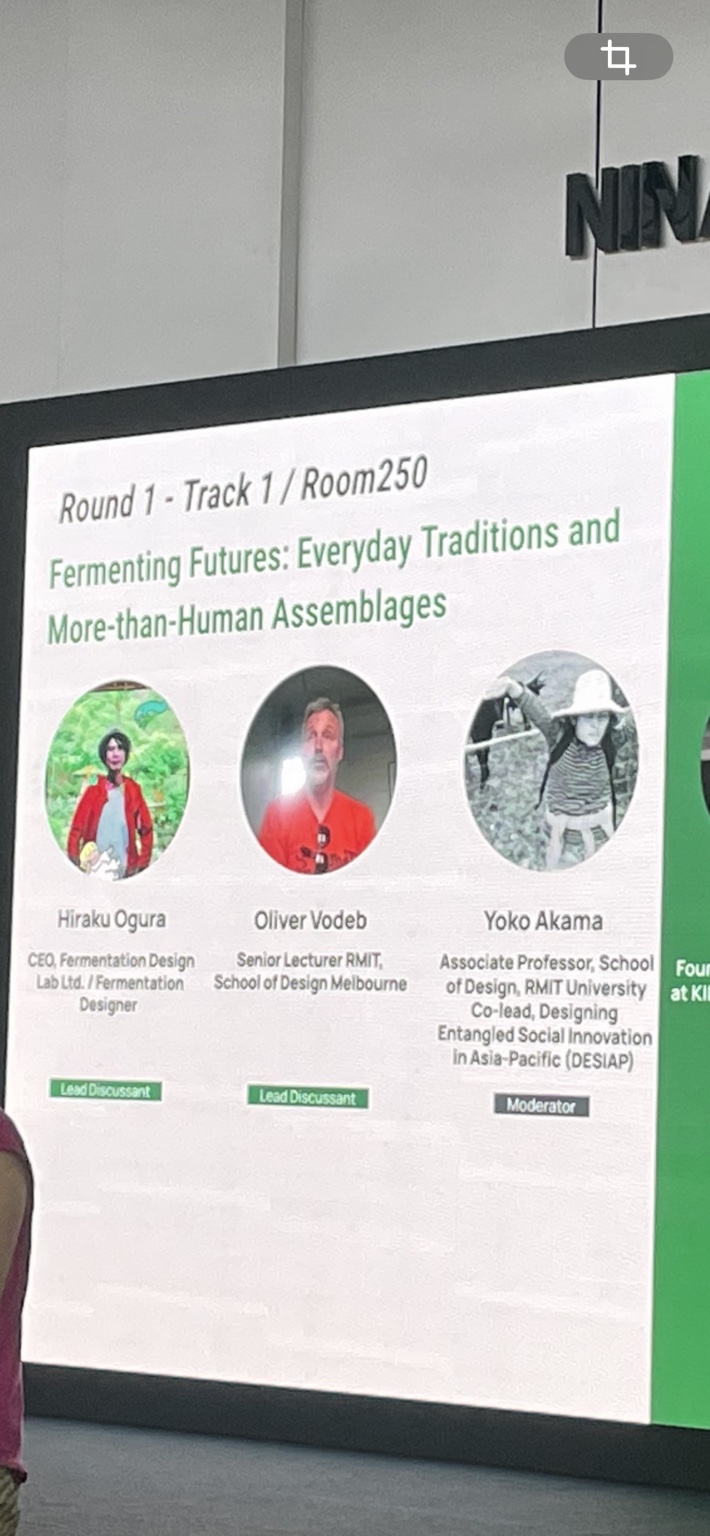
発酵を日常の実践から考えるThinking about fermentation through everyday practices
Hiraku OguraからOliver Vodebへと続く発酵文化の議論として記録されている。Tasting Bread、Toasties and Tips、micro-moments of fermentationが紹介され、日常の食や小さな実践と、more-than-humanな関係を考えるセッションとなった。個々の事例の全発言は今回取得できていない。The notes follow a discussion of fermentation culture from Hiraku Ogura to Oliver Vodeb. Tasting Bread, Toasties and Tips, and micro-moments of fermentation connected everyday food and small practices with more-than-human relationships. The complete explanations of individual examples were not retrieved.
Metabolic Designは完成した手法や固定レシピではなく、変わり続ける生態的・社会的条件のもとで関係と流れを読み、可視化し、読み取れるようにしていく実践として整理された。materialを捨てるのではなく、中心から少しずらし、関係を媒介するものとして捉える。会話、食事、踊りも、関係と代謝を媒介しうる。Metabolic Design was described not as a finished method or fixed recipe but as reading, visualising and making relationships and flows legible amid changing ecological and social conditions. Materials are not abandoned but moved slightly off-centre and understood as mediators. Conversation, eating and dancing can also mediate relationships and metabolism.
Deposit / Filter — デルタの蓄積と取り出しDeposit / Filter — accumulation and extraction in the delta
メコンデルタのsedimentやsoilに蓄積した栄養・豊かさをDepositとして、魚を通してタンパク質を得ることや、ココナッツを通して糖を得ることをFilterとして捉える説明があった。完成した製品だけでなく、それを可能にする物質の蓄積と流れに注意を向ける。Nutrients and abundance accumulated in delta sediment and soil were described as Deposit; obtaining protein through fish or sugar through coconuts as Filter. Attention extends beyond finished products to the accumulated matter and flows that enable them.
Brown Water / Hungry Water
Brown Waterは土砂・栄養・生命を含む豊かさとして語られ、Hungry Waterとの対比が議論された。見た目の透明さだけを豊かさの基準にしない視点と、写真映えしにくい適応(non-photogenic adaptation)も記録に残る。ただし、後者の具体例は未取得のため付加していない。Brown Water was discussed as abundance containing sediment, nutrients and life, in contrast with Hungry Water. Visual clarity alone is not the measure of abundance. “Non-photogenic adaptation” also appears in the notes, but no specific examples were retrieved.
Conditions / Care — 条件を調整し続けるConditions / Care — continually adjusting conditions
危機や対立が存在することを前提に、生命と関係が育つ条件をcareし、adjustし、developし続ける。環境をsenseし、その都度条件を調整する営みとして捉えることが、固定した解法を当てはめることとの違いになる。Taking crises and conflict as present realities, continue caring for, adjusting and developing the conditions in which life and relationships grow. Sensing the environment and responding to conditions differs from imposing a fixed solution.
文字起こし原文 — 未取得Original transcript — not retrieved
このセッションの文字起こし全文は今回の履歴検索では取得できていません。原文を補作せず、上の本文は取得できた整理記録に基づいています。The complete session transcript was not retrieved through the history search. The text above draws on available edited notes; missing original wording has not been invented.
取得できた整理記録を開くOpen retrieved notes
編集済みの整理文です。文字起こし原文ではありません。Edited notes, not an original transcript.
発酵を日常の実践から考える
Hiraku OguraからOliver Vodebへと続く発酵文化の議論として記録されている。Tasting Bread、Toasties and Tips、micro-moments of fermentationが紹介され、日常の食や小さな実践と、more-than-humanな関係を考えるセッションとなった。個々の事例の全発言は今回取得できていない。

Metabolic Design — 物質よりも関係と流れへ
Metabolic Designは完成した手法や固定レシピではなく、変わり続ける生態的・社会的条件のもとで関係と流れを読み、可視化し、読み取れるようにしていく実践として整理された。materialを捨てるのではなく、中心から少しずらし、関係を媒介するものとして捉える。会話、食事、踊りも、関係と代謝を媒介しうる。

Deposit / Filter — デルタの蓄積と取り出し
メコンデルタのsedimentやsoilに蓄積した栄養・豊かさをDepositとして、魚を通してタンパク質を得ることや、ココナッツを通して糖を得ることをFilterとして捉える説明があった。完成した製品だけでなく、それを可能にする物質の蓄積と流れに注意を向ける。

Brown Water / Hungry Water
Brown Waterは土砂・栄養・生命を含む豊かさとして語られ、Hungry Waterとの対比が議論された。見た目の透明さだけを豊かさの基準にしない視点と、写真映えしにくい適応(non-photogenic adaptation)も記録に残る。ただし、後者の具体例は未取得のため付加していない。

Conditions / Care — 条件を調整し続ける
危機や対立が存在することを前提に、生命と関係が育つ条件をcareし、adjustし、developし続ける。環境をsenseし、その都度条件を調整する営みとして捉えることが、固定した解法を当てはめることとの違いになる。
English companion notes for this section (edited, not a verbatim transcript):

Fermenting Futures speaker slide. Day 4, Round 1, Track 1.

Thinking about fermentation through everyday practices

The notes follow a discussion of fermentation culture from Hiraku Ogura to Oliver Vodeb. Tasting Bread, Toasties and Tips, and micro-moments of fermentation connected everyday food and small practices with more-than-human relationships. The complete explanations of individual examples were not retrieved.

Metabolic Design — relationships and flows beyond materials

Metabolic Design was described not as a finished method or fixed recipe but as reading, visualising and making relationships and flows legible amid changing ecological and social conditions. Materials are not abandoned but moved slightly off-centre and understood as mediators. Conversation, eating and dancing can also mediate relationships and metabolism.

Deposit / Filter — accumulation and extraction in the delta

Nutrients and abundance accumulated in delta sediment and soil were described as Deposit; obtaining protein through fish or sugar through coconuts as Filter. Attention extends beyond finished products to the accumulated matter and flows that enable them.

Brown Water was discussed as abundance containing sediment, nutrients and life, in contrast with Hungry Water. Visual clarity alone is not the measure of abundance. “Non-photogenic adaptation” also appears in the notes, but no specific examples were retrieved.

Conditions / Care — continually adjusting conditions

Taking crises and conflict as present realities, continue caring for, adjusting and developing the conditions in which life and relationships grow. Sensing the environment and responding to conditions differs from imposing a fixed solution.

Key points

Fermentation and the delta were considered as processes of relationship, flow, accumulation and care rather than finished objects or single technologies. Metabolic Design was framed as continually reading and adjusting the conditions that allow them to grow.

Copy
14:00–15:00 · Round 1 / Track 2 · NEXT100
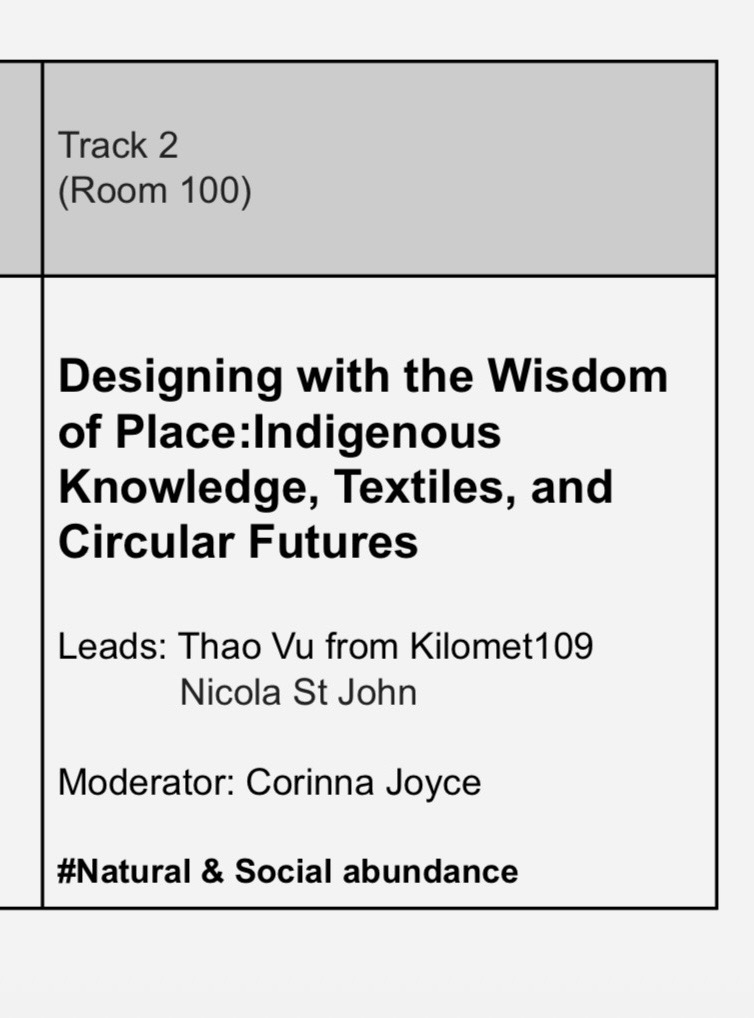
Designing with the Wisdom of Place: Indigenous Knowledge, Textiles, and Circular Futures
Leads:Thao Vu(Kilomet109)/ Nicola St John Moderator:Corinna Joyce
Designing with the Wisdom of Placeのセッション案内。Session announcement for Designing with the Wisdom of Place.
確認できたセッション情報Confirmed session information
共有されたセッション案内画像から、場所の知、Indigenous Knowledge、テキスタイル、循環の未来を扱うタイトルと登壇者を確認できた。テーマタグはNatural & Social abundance。発言内容や参加記録は今回取得できていないため、タイトルから内容を推測して補ってはいない。The announcement image confirms the title and speakers, addressing knowledge of place, Indigenous Knowledge, textiles and circular futures. The theme tag is Natural & Social abundance. Speech content and participation notes were not retrieved, so no account has been inferred from the title.
文字起こし原文 — 未取得Original transcript — not retrieved
このセッションの文字起こし全文は今回の履歴検索では取得できていません。原文を補作せず、上の本文は取得できた整理記録に基づいています。The complete session transcript was not retrieved through the history search. The text above draws on available edited notes; missing original wording has not been invented.
取得できた整理記録を開くOpen retrieved notes
編集済みの整理文です。文字起こし原文ではありません。Edited notes, not an original transcript.
確認できたセッション情報
共有されたセッション案内画像から、場所の知、Indigenous Knowledge、テキスタイル、循環の未来を扱うタイトルと登壇者を確認できた。テーマタグはNatural & Social abundance。発言内容や参加記録は今回取得できていないため、タイトルから内容を推測して補ってはいない。
English companion notes for this section (edited, not a verbatim transcript):

Session announcement for Designing with the Wisdom of Place.

Confirmed session information

The announcement image confirms the title and speakers, addressing knowledge of place, Indigenous Knowledge, textiles and circular futures. The theme tag is Natural & Social abundance. Speech content and participation notes were not retrieved, so no account has been inferred from the title.

Key points

The parallel Track 2 session is represented by its title, speakers and announcement image. Lecture content was not retrieved.

Copy
Day 4 · Track 1 · NEXT250(個別時間は原資料未確認)Day 4 · Track 1 · NEXT250 (exact time unconfirmed in the original source)
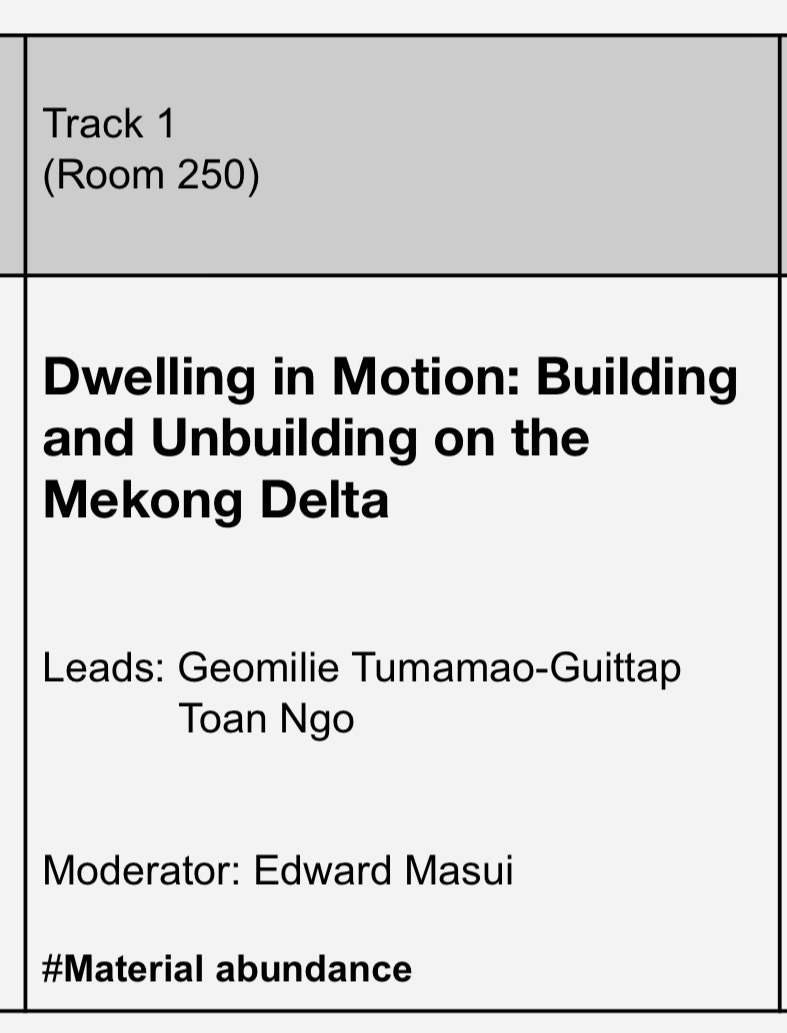
Dwelling in Motion: Building and Unbuilding on the Mekong Delta
Day 4の建築セッション案内。Day 5の同題セッションとは登壇者が異なる。Day 4’s architectural session announcement. Its speakers differ from the identically titled Day 5 session.
建てることと、ほどくことBuilding and unbuilding
線形の建設モデルを問い直し、砂の採取、地下水利用、地盤沈下を建築と切り離さずに考えた。建物だけを完成させるのでなく、土地や水の変化のなかで建て方・使い方・解体の仕方を見直す。The discussion questioned linear construction, connecting architecture with sand extraction, groundwater use and land subsidence. Rather than simply completing buildings, it reconsidered how to build, inhabit and dismantle them as land and water change.
水と住まいの多様な関係Diverse relationships between water and dwelling
船上、浮体、高床、半高床、陸上など、異なる住居のあり方が扱われた。amphibious houseも万能な答えとはせず、技術の制約と生活条件を合わせて考える。レジリエンスは建物が動けることだけでなく、暮らしを支える関係にもある。Boat, floating, stilt, semi-stilt and land-based housing were discussed. Amphibious houses were not treated as a universal answer: technical constraints must be considered with living conditions. Resilience lies in relationships that support life, not only in a building’s capacity to move.
Material abundance — 選択肢の豊かさMaterial abundance — a wealth of options
資源が限られる状況で、abundanceを物量だけでなく「選択肢の豊かさ」として捉える。地域の知、職人の技、既存の住まいの工夫を再評価し、AdaptationとControlの間から住み続ける条件を考えた。With limited resources, abundance can mean a wealth of options rather than quantities of material. Local knowledge, craft skills and existing housing ingenuity were reconsidered through the tension between Adaptation and Control and the conditions for continuing to live in place.
文字起こし原文 — 未取得Original transcript — not retrieved
音声の文字起こし全文は回収できていません。本文は取得できた整理記録に基づき、原文を補作していません。The full audio transcript has not been recovered. The text is based on available edited notes; missing original wording has not been invented.
編集済み整理記録を開くOpen edited notes
文字起こし原文ではありません。取得できた記録を統合した整理文です。These are consolidated edited notes from the retrieved records, not a verbatim transcript.
建てることと、ほどくこと
線形の建設モデルを問い直し、砂の採取、地下水利用、地盤沈下を建築と切り離さずに考えた。建物だけを完成させるのでなく、土地や水の変化のなかで建て方・使い方・解体の仕方を見直す。

水と住まいの多様な関係
船上、浮体、高床、半高床、陸上など、異なる住居のあり方が扱われた。amphibious houseも万能な答えとはせず、技術の制約と生活条件を合わせて考える。レジリエンスは建物が動けることだけでなく、暮らしを支える関係にもある。

Material abundance — 選択肢の豊かさ
資源が限られる状況で、abundanceを物量だけでなく「選択肢の豊かさ」として捉える。地域の知、職人の技、既存の住まいの工夫を再評価し、AdaptationとControlの間から住み続ける条件を考えた。
English companion notes for this section (edited, not a verbatim transcript):

Day 4 · Track 1 · NEXT250 (exact time unconfirmed in the original source)

Day 4’s architectural session announcement. Its speakers differ from the identically titled Day 5 session.

Building and unbuilding

The discussion questioned linear construction, connecting architecture with sand extraction, groundwater use and land subsidence. Rather than simply completing buildings, it reconsidered how to build, inhabit and dismantle them as land and water change.

Diverse relationships between water and dwelling

Boat, floating, stilt, semi-stilt and land-based housing were discussed. Amphibious houses were not treated as a universal answer: technical constraints must be considered with living conditions. Resilience lies in relationships that support life, not only in a building’s capacity to move.

Material abundance — a wealth of options

With limited resources, abundance can mean a wealth of options rather than quantities of material. Local knowledge, craft skills and existing housing ingenuity were reconsidered through the tension between Adaptation and Control and the conditions for continuing to live in place.

Key points

Dwelling is understood through relationships with water, ground, resources and livelihoods, not only as fixed architecture. Local skills and diverse options support adaptation.

Copy
15:30–16:30 · Round 2 / Track 2 · NEXT100
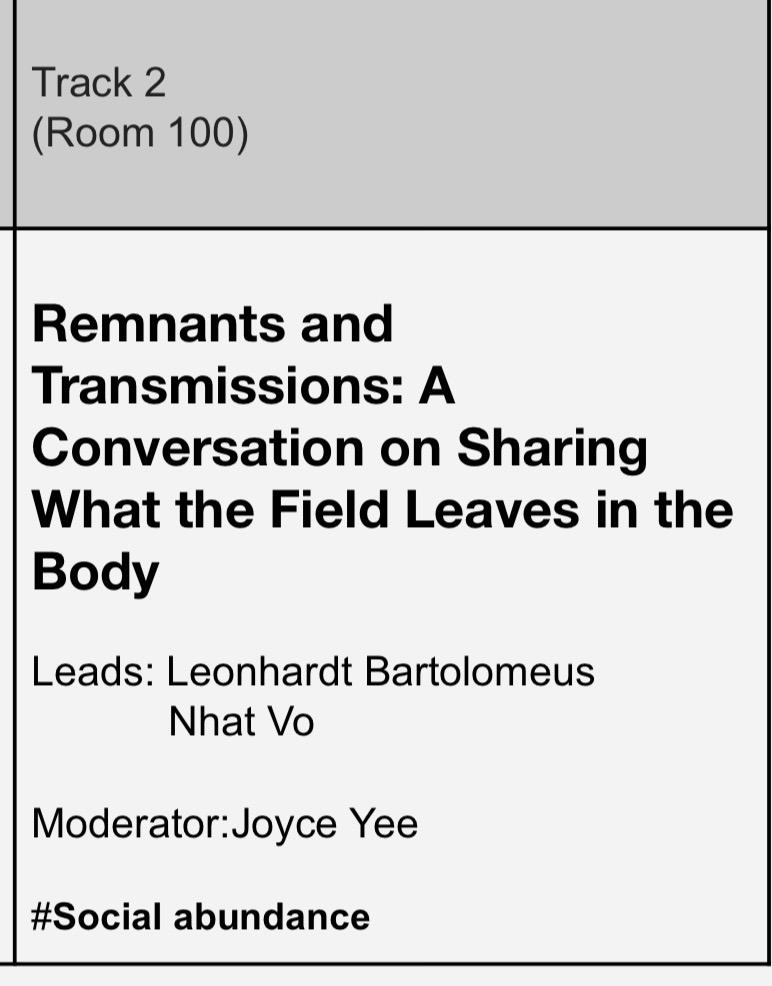
Remnants and Transmissions: A Conversation on Sharing What the Field Leaves in the Body
Leads:Leonhardt Bartolomeus(Barto)/ Nhat Vo Moderator:Joyce Yee
Remnants and Transmissionsのセッション案内。前セッションと区別して収録。Remnants and Transmissions announcement, recorded separately from the preceding session.
経験が身体に残すものを、どう共有するかSharing what experience leaves in the body
直前のFermenting Futuresとは別のセッションとして扱う。テーマは、現地で得た経験や身体感覚をどのように意味づけ、他者へ伝えるか。登壇者の綴りは、音声認識由来の表記ではなく、共有された案内画像のLeonhardt Bartolomeus / Nhat Voを用いた。This is treated as a separate session from Fermenting Futures. It explores making sense of and sharing field experiences and bodily sensations. Speaker names follow the announcement image—Leonhardt Bartolomeus and Nhat Vo—rather than speech-recognition spellings.
Barto — 誤解を消さず、わからなさから学ぶBarto — learning from not knowing, without erasing misunderstanding
misunderstandingを単にpositiveと評価するのではなく、避けられない事実として捉える。I don’t knowという立場で共に学び、gray areaや対話の余地を残す姿勢が示された。伝達のずれを急いで一つの答えに整えるより、理解が生成していく関係を保つ。Misunderstanding was treated as an inevitable fact rather than simply something positive. Learning together from “I don’t know” leaves room for grey areas and dialogue. Instead of quickly resolving differences into one answer, the aim is to sustain relationships through which understanding emerges.
Nhat — 経験を複製するのではなく、機会をつくるNhat — creating opportunities rather than replicating experience
経験そのものは複製できない。open callやframeworkを通して、他者が自分の経験を持てる機会をつくる。茶の集まりは4回を経て参加者が減り、形式がベトナムの文化に合わなかったのではないかという振り返りが語られた。故郷でも自分が外国人のように感じることがあり、地域のlanguageは、滞在して存在を知ってもらい、聴き、対話と交換を重ねる中で学ぶ。Consistencyは単に同じ企画を続けるのでなく、そこに居続けることとpresenceに関わる。Experience itself cannot be duplicated. Open calls and frameworks can create opportunities for others to have their own experiences. Attendance at tea gatherings declined after four meetings, prompting reflection on whether the format suited Vietnamese culture. Even one’s hometown can feel foreign. Local language is learned by staying, becoming known, listening, conversing and exchanging. Consistency concerns presence and continuing to be there, not just repeating an event.
Metabolic Abundance — 拡大よりもenoughMetabolic Abundance — enough rather than expansion
adaptation、lower ego、traditional knowledgeが議論に現れた。他者に合わせて自分の姿勢を調整し、欲張りすぎず、scale-upを唯一の方向にしない。「abundanceがもはやabundantではない」という問題意識から、enoughを考える。祭りの後の茶の場の再開も地域の受け手との関係次第であり、外へ見せることと地域の生活を保つことには繊細な境界がある。観光だけで価値を捉えない。Adaptation, lowering the ego and traditional knowledge entered the discussion. Adjust to others, avoid greed and do not make scaling up the only direction. The thought that “abundance is no longer abundant” prompts a consideration of enough. Restarting tea gatherings after the festival also depends on local audiences. Exposure and local life have a delicate boundary; value cannot be understood through tourism alone.
文字起こし原文 — 未取得Original transcript — not retrieved
このセッションの文字起こし全文は今回の履歴検索では取得できていません。原文を補作せず、上の本文は取得できた整理記録に基づいています。The complete session transcript was not retrieved through the history search. The text above draws on available edited notes; missing original wording has not been invented.
取得できた整理記録を開くOpen retrieved notes
編集済みの整理文です。文字起こし原文ではありません。Edited notes, not an original transcript.
English companion notes for this section (edited, not a verbatim transcript):

Remnants and Transmissions announcement, recorded separately from the preceding session.

Sharing what experience leaves in the body

This is treated as a separate session from Fermenting Futures. It explores making sense of and sharing field experiences and bodily sensations. Speaker names follow the announcement image—Leonhardt Bartolomeus and Nhat Vo—rather than speech-recognition spellings.

Barto — learning from not knowing, without erasing misunderstanding

Misunderstanding was treated as an inevitable fact rather than simply something positive. Learning together from “I don’t know” leaves room for grey areas and dialogue. Instead of quickly resolving differences into one answer, the aim is to sustain relationships through which understanding emerges.

Nhat — creating opportunities rather than replicating experience

Experience itself cannot be duplicated. Open calls and frameworks can create opportunities for others to have their own experiences. Attendance at tea gatherings declined after four meetings, prompting reflection on whether the format suited Vietnamese culture. Even one’s hometown can feel foreign. Local language is learned by staying, becoming known, listening, conversing and exchanging. Consistency concerns presence and continuing to be there, not just repeating an event.

Metabolic Abundance — enough rather than expansion

Adaptation, lowering the ego and traditional knowledge entered the discussion. Adjust to others, avoid greed and do not make scaling up the only direction. The thought that “abundance is no longer abundant” prompts a consideration of enough. Restarting tea gatherings after the festival also depends on local audiences. Exposure and local life have a delicate boundary; value cannot be understood through tourism alone.

Key points

Experience cannot simply be transferred to someone else. Leaving space for not knowing and misunderstanding, while creating conditions for each person’s experience, offers a way to share what remains in the body.

Copy